Elijah
Behold, I will send you Elijah the prophet before the coming of the great and dreadful day of the LORD: And he shall turn the heart of the fathers to the children, and the heart of the children to their fathers, lest I come and smite the earth with a curse. —Malachi 4:5-6
“Elijah comes first and restores all things, but Elijah has already come, and they did not recognize him.”
This is Herman Melville; he wrote Moby-Dick, often claimed as the best novel in English, when he was just thirty-one. It deals with Captain Ahab; Elijah the prophet fought against Israel’s king Ahab and his wife Jezebel, a Phoenician priestess of Baal. The novel is an allegory; the white whale is God.
Melville actually started as a novelist, writing about his adventures in whaling and living among the natives in the Pacific. When his work took an experimental turn, beginning with Moby-Dick, the public was not receptive, and he eventually turned to writing shorter pieces; the first, "Bartleby the Scrivener," is a masterpiece. Melville was also a good poet, but I prefer Poe.
Sweetness and Light
Elias Artista: Elijah in the Alchemical Tradition
”Elias Artista — A Precursor of the Messiah in Natural Science” - Herbert Breger:
The history of Elias artista is the history of an almost forgotten utopian concept in natural science. The advent of the modern age brought with it a widespread belief amongst physicians and chemists, particularly in Germany, that God in a not too distant future would be sending a person, capable of revealing all nature’s secrets to humanity, that person being Elias artista. His disclosures were to coincide directly with the end of this iniquitous world and the beginning of a messianic age (a golden world or the millennium).
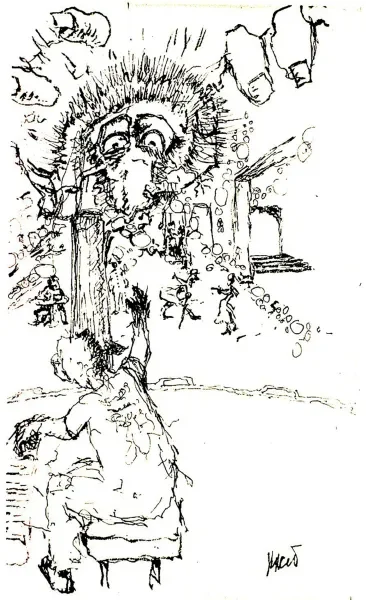
John said, I am the voice of one crying in the wilderness: “Prepare the way of the LORD; Make straight in the desert A highway for our God.”
Paracelsus, Book Concerning the Tincture of Philosophers:
Nothing is concealed that shall not be revealed. There are many more secrets concerning the transmutation, though they are little known, for if they are revealed to someone their fame is not immediately common. With this art, the Lord bestows the wisdom to keep it secret until the advent of Elias Artist. Then shall be revealed what has been concealed.
Eirenaeus Philalethes, An Open Entrance to the Closed Palace of the King:
My Book is the precursor of Elias, designed to prepare the Royal way of the Master; and would to God that by its means all men might become adepts in our Art - for then gold, the great idol of mankind, would lose its value, and we should prize it only for its scientific teaching. Virtue would be loved for its own sake.
Walter Pagel, “The Paracelsian Elias Artista and the Alchemical Tradition”:
To Paracelsus Helias represents various features of an ideal through which enlightenment and happiness will descend upon future generations and lift the veil of obscurity which still blinds him and his age. Helias is the perfect adept to come . . . Paracelsus’s Helias artista with his messianic associations and the vision of a super-chemistry coming true in a distant future ties up with a strong mediaeval tradition.
Khidr the Green Prophet
In his devotion to bhang, with reverence, not with the worship, which is due to Allah alone, the North Indian Mussulman joins hymning to the praise of bhang. To the follower of the later religion of Islam the holy spirit in bhang is not the spirit of the Almighty, it is the spirit of the great prophet Khizr, or Elijah. That bhang should be sacred to Khizr is natural, Khizr is the patron saint of water. Still more Khizr means green, the revered color of the cooling water of bhang;. So the Urdu poet sings “When I quaff fresh bhang I liken its color to the fresh light down of thy youthful beard.” The prophet Khizr or the green prophet cries “May the drink be pleasing to thee.” (Campbell, 1894)
“Assuredly, I say to you, among those born of women there has not risen one greater than John the Baptist; but he who is least in the kingdom of heaven is greater than he.” —Matthew 11:11
There’s an interesting parallel with the humorist P.G. Wodehouse. What Garcia did in the flesh, he did on paper first. They were both tremendous workhorses and absolute masters of their craft, and they both created parallel worlds halfway between heaven and earth, populated with eccentric characters and suffused with Sweetness and Light, where no one's problems were too serious. Garcia was named after composer Jerome Kern, who is pictured on the far right here, Wodehouse is second from the left. If you read Wodehouse, it will give you a feel for good writing, and if you learn to discern good writing from bad, it will do you great service.
“Sweetness and Light” is the opening chapter of Matthew Arnold's 1869 work, Culture and Anarchy, defining his ideal of culture as a blend of beauty/gentleness (“sweetness”) and intelligence /enlightenment (“light”). Arnold argues culture is not just pedantic knowledge, but the pursuit of perfection, aiming to make reason and the will of God prevail in society.


Jerry’s Erudite Gentleman

Sax Player, 1987

Khidr and Elijah, 16th century Persian manuscript


Flamenco Dancer, 1991

Horton, 1995


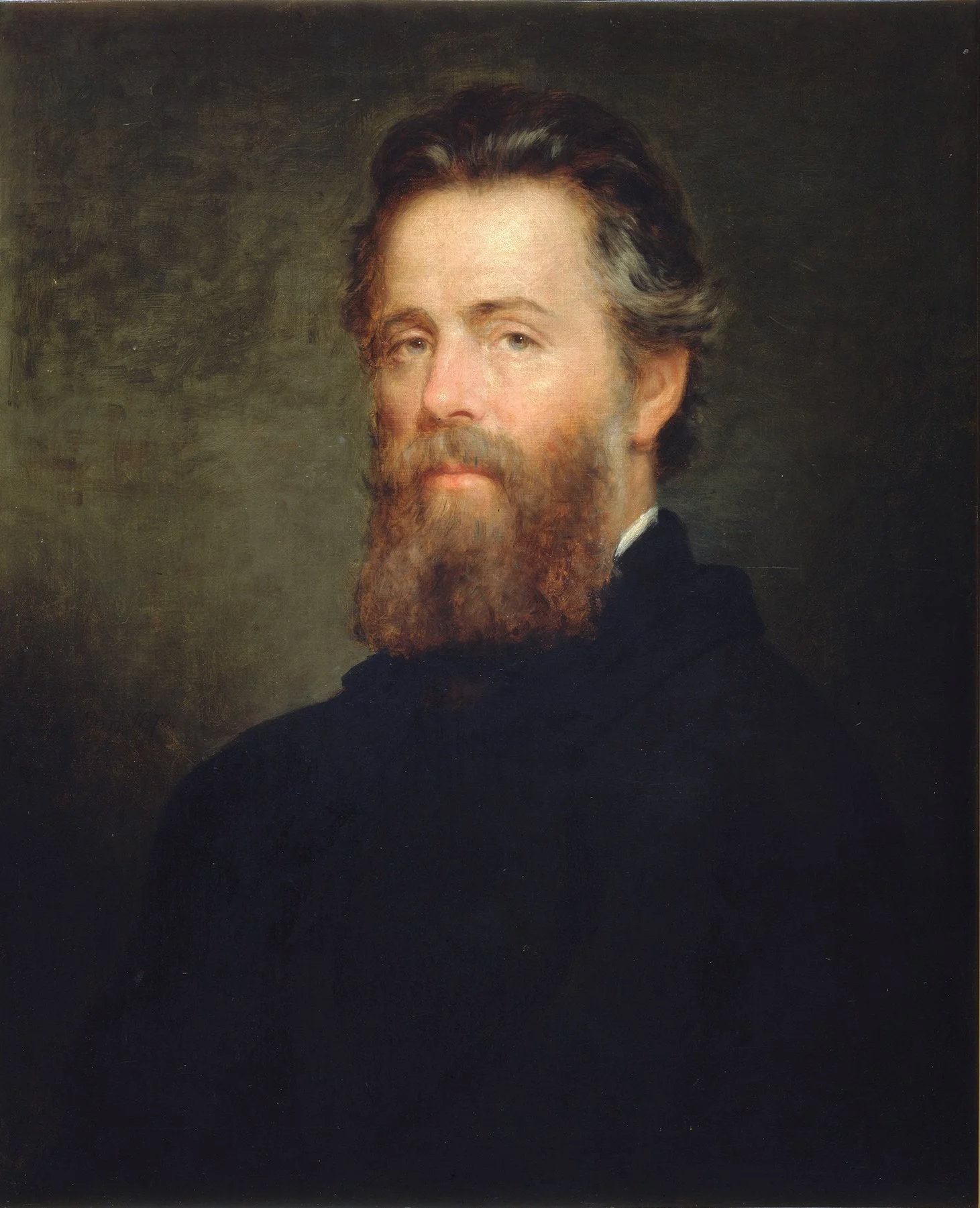
Jerry Garcia was born 123 years to the day after Mellvile, August 1st, aces and eights. He said “I don't want people agonizing over who or what I was when I was here when I'm not here anymore”; he denied he was God but he radiated divinity. When I noticed the 123-year gap between him and Melville, I started wondering if they were the same soul, and I'm pretty sure that's the case. For example, there's a record called Pizza Tapes, with Garcia, Tony Rice, and David Grisman. Well, Melville had a book called Piazza Tales.
Garcia's lyricist, Robert Hunter, was actually christened Robert Burns, same as Scotland's national poet, who wrote Auld Lang Syne, the New Year's Eve song. Same soul, I would wager. Yes, God has that much control over the creation.