The Dark Enlightenment is avowedly anti-democratic, advocating for monarchy or a kind of techno-feudalism with CEO dictator as head of state. I am not sure whether Yarvin means that he wants a Messiah, or how Jesus will answer to the description of CEO dictator when he arrives, but I think recent events have shown that power tends to corrupt, and executive power should be curbed, rather than expanded. When the Romans banished kings and established the Republic, it was partly because Tarquin the Proud had been autocratic and authoritarian, but the straw that broke the camel’s back was the rape and suicide of Lucretia. Our democracy needs work, but one of the lessons of the 20th century is that piecemeal social engineering is safer than wholesale change.
Political
I edited a new edition of the 1602 Anti-Machiavelli, the most comprehensive rebuttal to Machiavelli ever published—
There was a time when I was more aligned with Yarvin’s ideas; I even found the word “democracy” irritating, but the pandemic made me rethink my position. I was in the minority who were suspicious and opposed from the start, but it made me affirm the importance of consent, and democracy, at bottom, amounts to the consent of the governed. The public were generally too quick to grant consent, too credulous, but their patience and flexibility were admirable. The experience of living with arbitrary rules imposed without consent gave me a new appreciation of democracy, even though I was in a resented minority.
The rape of Lucretia and the birth of the Roman Republic
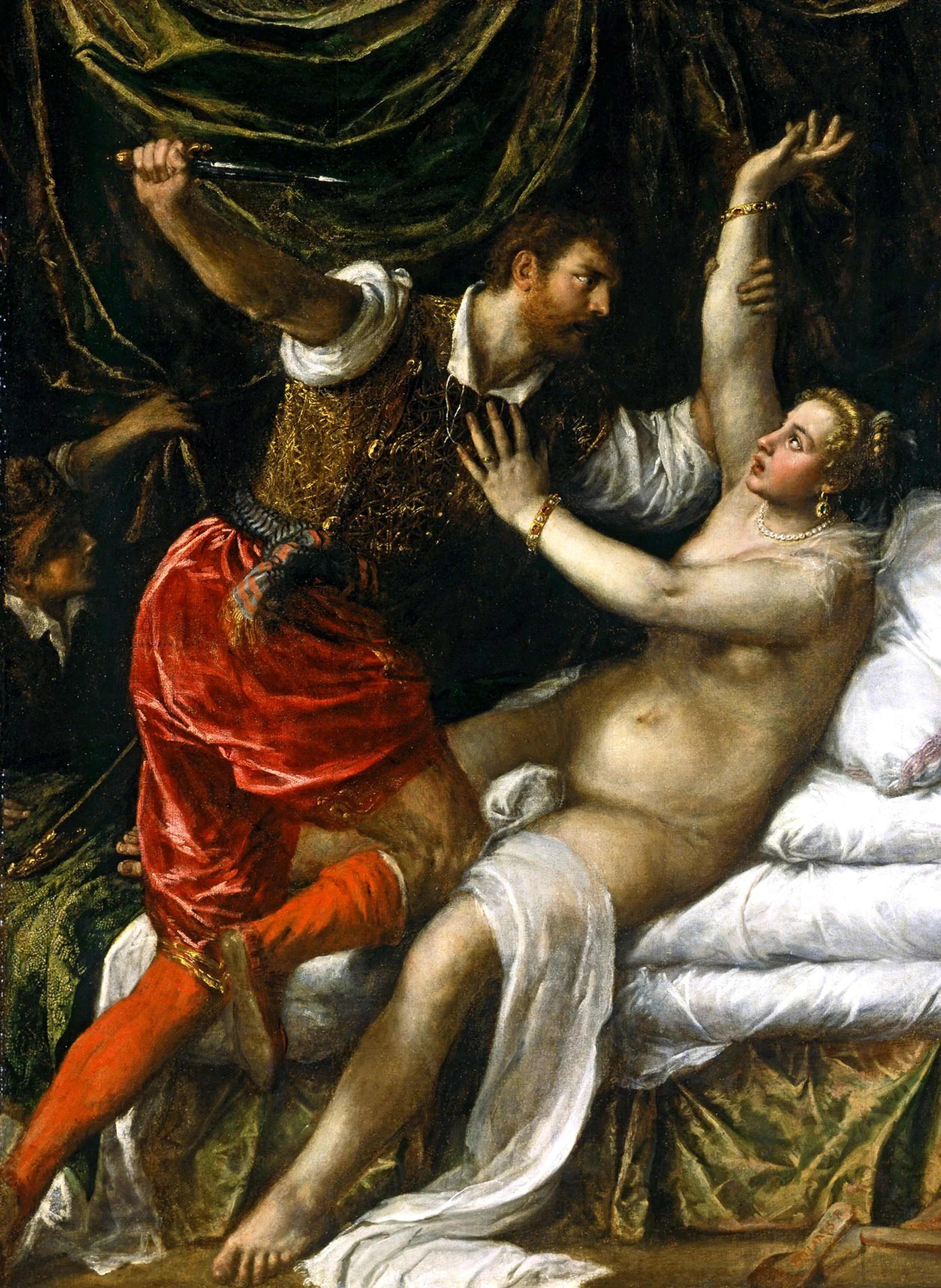
Tarquin and Lucretia, Titian, 1571
Vindiciae contra tyrannos (Revenge against Tyrants, 1579):
The true causes why Tarquin was deposed, were because he altered the custom whereby the king was obliged to advise with the senate on all weighty affairs; that he made war and peace according to his own fancy; that he treated confederacies without demanding counsel and consent from the people or senate; that he violated the laws whereof he was made guardian; briefly that he made no reckoning to observe the contracts agreed between the former kings, and the nobility and people of Rome.

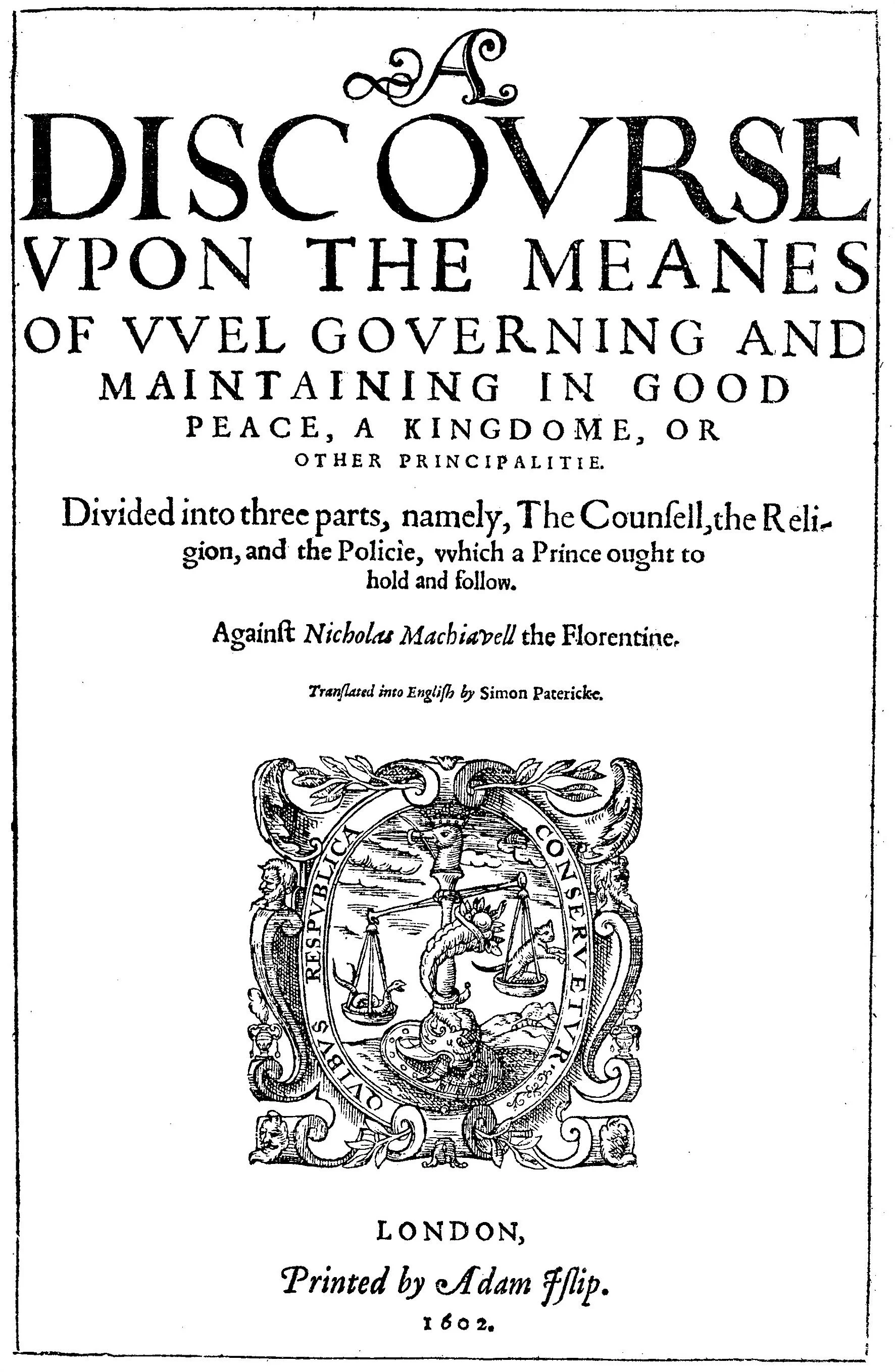
1602 Anti-Machiavel
History doesn’t repeat, but it often rhymes, and our present situation is frequently compared to the fall of the Roman Empire. This may prove an accurate assessment, but there are also parallels to an earlier, more hopeful period, when the Roman Republic was established in 509 BC. The Republic was established in response to a series of abuses of power committed by Tarquinius Superbus, or Tarquin the Proud, which culminated in the violation of a woman, Lucretia, by Tarquin’s son Sextus Tarquinius. Her subsequent suicide prompted enough popular outrage to compel a structural change in government, from kings to annually elected consuls.
In Livy’s account, the private crime of a prince became the public catalyst for revolution. Rome’s monarchy fell because power had ceased to restrain itself. Tarquin was known for his autocratic style, and he ruled more by personal power than by consensus. He engaged in wars and used them to bolster his prestige and power, not necessarily reflecting the collective will of the Roman people. His disregard for popular or senatorial input was one reason resentment grew.
Anti-Machiavel:
Tarquin, who enterprised to slay his father-in-law king Servius Tullius to obtain the kingdom of Rome, showed well by that act and many others that he was a very tyrant… For they say that when he changed his just and royal domination into a tyrannical government, he became a contemner and despiser of all his subjects, both plebian and patrician. He brought a confusion and a corruption into justice; he took a greater number of servants into his guard than his predecessors had; he took away the authority from the Senate; moreover, he dispatched criminal and civil cases after his fancy, and not according to right; he cruelly punished those who complained of that change of estate as conspirators against him; he caused many great and notable persons to die secretly without any form of justice; he imposed tributes upon the people against the ancient form, to the impoverishment and oppression of some more than others; he had spies to discover what was said of him, and punished rigorously those who blamed either him or his government. These are the colors wherewith the histories paint Tarquin, and these are ordinarily the colors and livery of all tyrants’ banners, whereby they may be known.
But the straw that broke the camel’s back was the rape of Lucretia. A group of noblemen, boasting of their wives’ virtue, return unexpectedly to their homes; only one, Lucretia, is found faithful and industrious. Her virtue becomes an object of desire for Sextus Tarquinius, son of Tarquin the Proud, the last king of Rome. Sextus returns at night, threatens her with violence and public disgrace, and rapes her. Lucretia summons her husband and father. She recounts the assault and insists that though she is not morally guilty, she will not allow her body to become a precedent for dishonor. She kills herself before them.
At that moment, the narrative shifts from private tragedy to public revolution. Lucius Junius Brutus lifts the bloody dagger, swears that no king shall rule Rome again, and calls the people to expel the Tarquins. The monarchy falls. In 509 BCE, the Roman Republic is born. Whether strictly historical or mythologized, the story mattered because Rome chose to remember it as its origin. The Republic began with the conviction that unrestrained power had crossed a line that could not be tolerated.
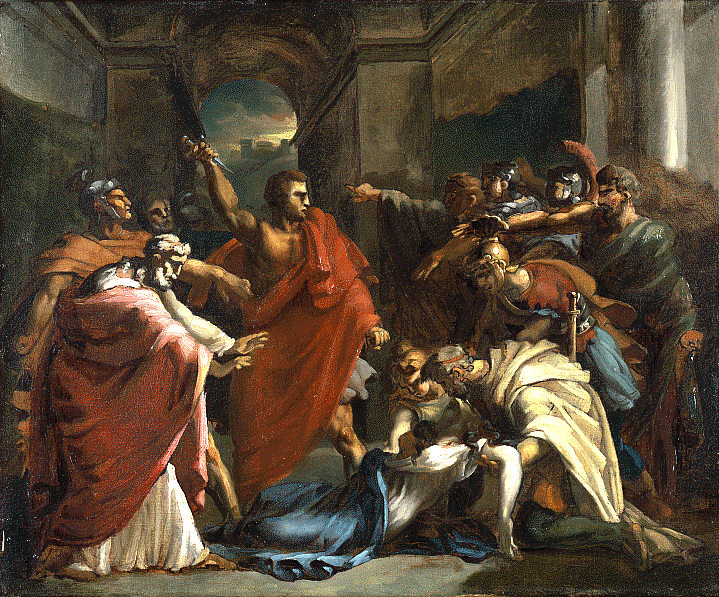
The Oath of Brutus after the Death of Lucretia, Théodore Géricault, 1816
Rome’s response was not merely emotional. It was architectural. The monarchy was replaced by two annually elected consuls. Power was divided. Terms were limited. Magistracies were layered. The Senate endured as an advisory body, but executive authority became temporary and shared. Later reforms added tribunes to protect the plebeians, formalizing internal checks. The Romans did not simply remove a tyrant; they altered the structure that had enabled him. The founding oath—that no king would rule again—was embedded into procedure.
The monarchy was replaced by dual consulship—two magistrates, each able to check the other. Tenure was annual. Extraordinary powers were temporary. Later, tribunes were instituted to represent plebeian interests and to interpose veto power. Law was written and made public in the Twelve Tables. Authority was fragmented intentionally; the system was constructed on the premise that even virtuous men require limits. Power, unbounded, decays.
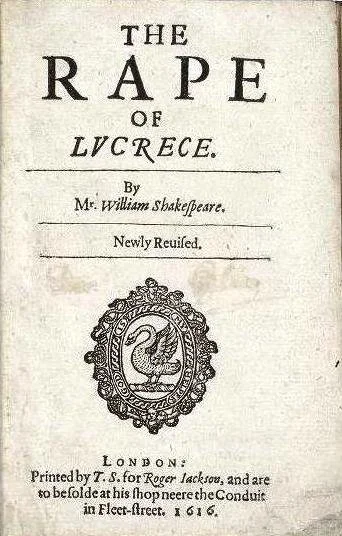
When the Lucretia story resurfaced in Elizabethan England, it did so not as antiquarian legend, but as living political reflection. In 1594, The Rape of Lucrece appeared as only the second work published under the name of William Shakespeare. Before the English and Roman histories, before the great tragedies of kingship and civil war, Shakespeare chose to meditate on the founding trauma of the Roman Republic.
Shakespeare is often praised for psychological insight or poetic brilliance. Less frequently acknowledged is his depth as a political thinker. From the beginning of his published career, he was preoccupied with the conditions under which power remains lawful, and the tipping point at which it does not. The Lucretia poem already contains the seeds of Julius Caesar, Hamlet, and Macbeth: the perennial question of whether authority governs itself, or corrodes from within.
Debt and the First Plebian Secession
The Republic begins with a movement against arbitrary royal power, and almost immediately confronts a different form of domination: economic power over citizens through debt. In Rome, military service and debt were intertwined; political liberty without economic protection proved unstable, and reform came through institutional innovation.
Shortly after the expulsion of Tarquin, the new Republic faced a crisis; not monarchy versus liberty this time, but patricians versus plebeians. What triggered it?
Heavy war levies (Rome was constantly fighting neighbors)
Debt bondage (nexum) — plebeians who couldn’t repay loans could be enslaved by creditors
Political exclusion from meaningful power
Harsh treatment by aristocratic magistrates
According to Livy, the breaking point came when a veteran soldier, ruined by debt and mistreated by creditors, publicly displayed his scars—both from war and from chains. The symbolism is powerful: the man who fought for the Republic was enslaved by it.
What Did the Plebs Do? They did not riot. They did not storm the Senate. They withdrew. The plebeians collectively left Rome and encamped on the Mons Sacer (Sacred Mount). This was a labor strike on a civilizational scale. Since plebeians formed the backbone of the army and workforce, the Republic couldn’t function without them.
This is the key innovation: collective non-cooperation instead of violent overthrow. What was the result? The patricians conceded. The plebs gained:
The office of the Tribune of the Plebs
Personal sacrosanctity for tribunes
A political voice capable of vetoing magistrates
The Republic was rebalanced.