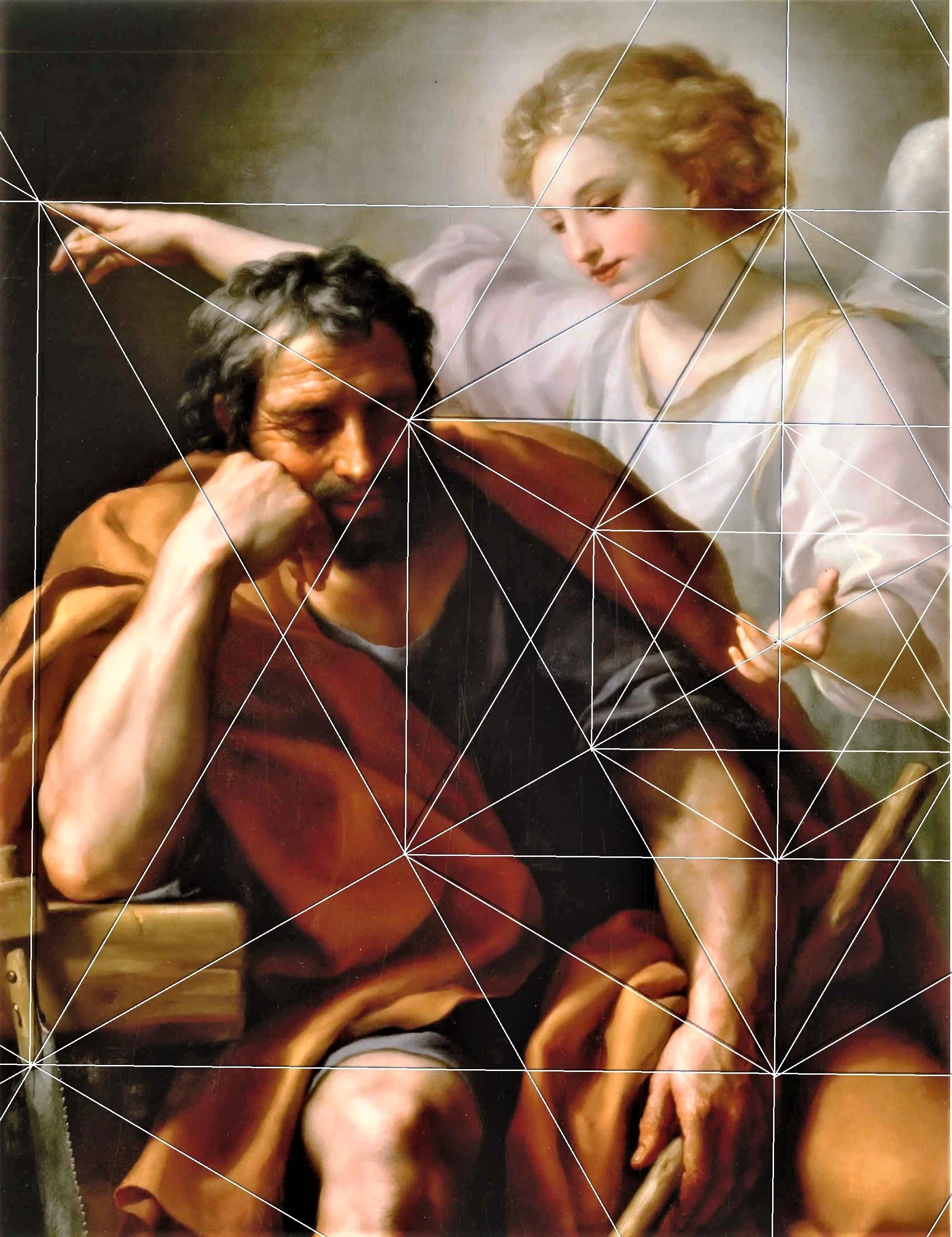
The Dream of St. Joseph, Anton Raphael Mengs 1774
Geometry
The United States needs some theology and geometry, some taste and decency. I suspect that we are teetering on the edge of the abyss.
—A Confederacy of Dunces
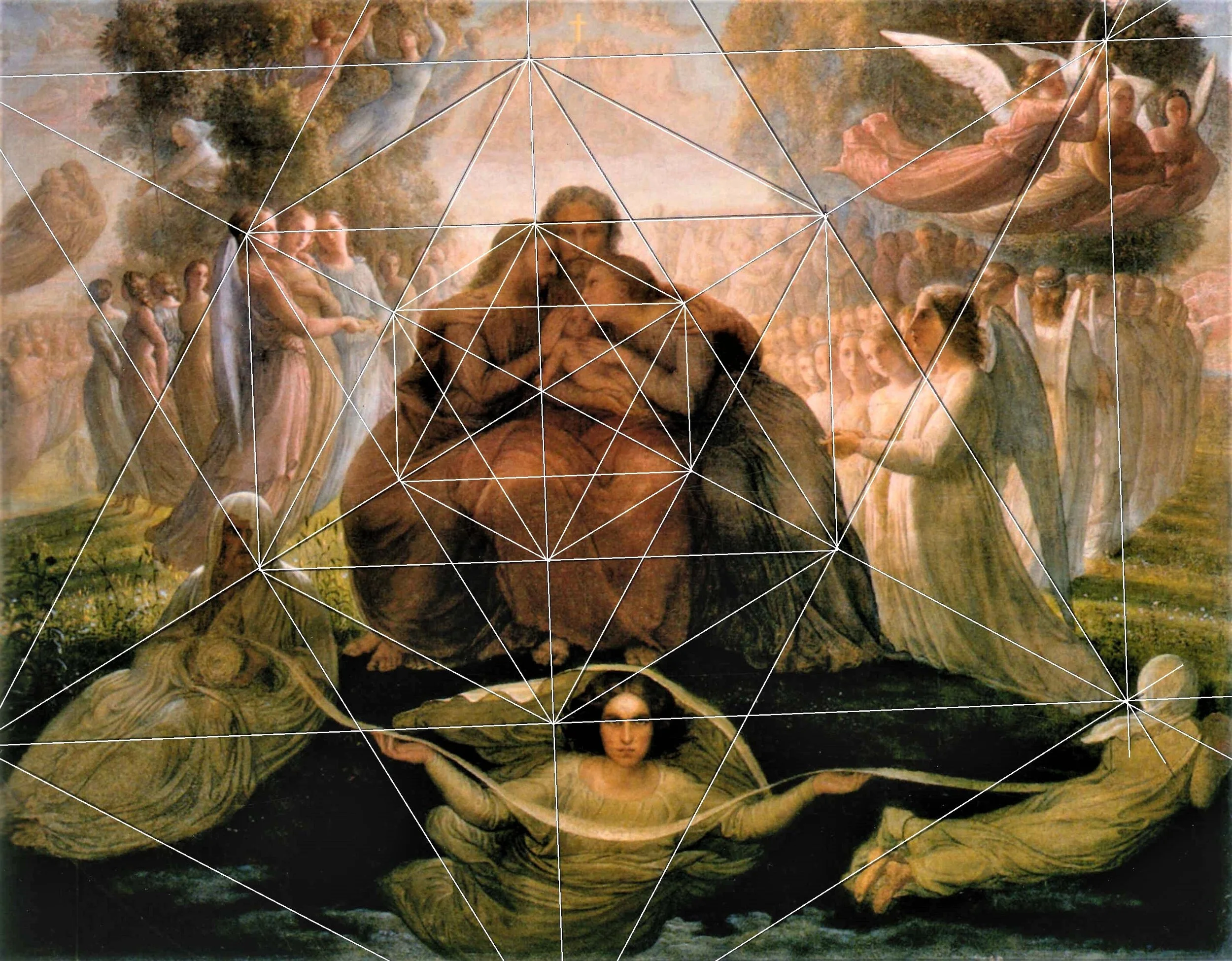
Louis Janmot, Génération divine 1854
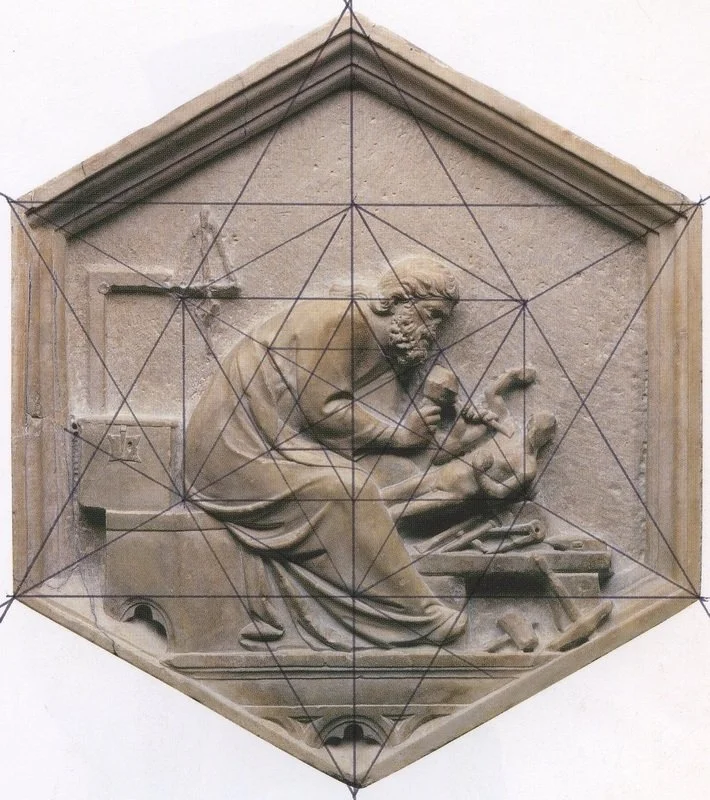
Relief from Florence, Italy
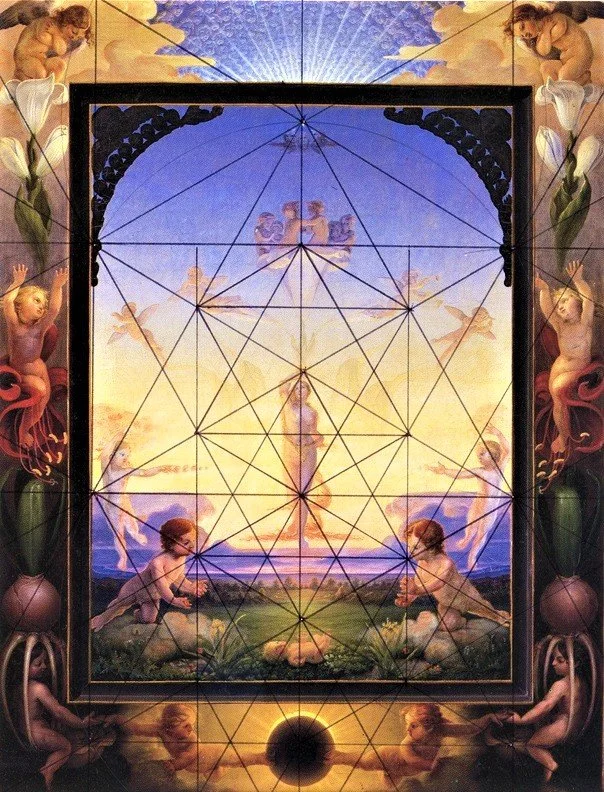
Morning, Philp Otto Runge, 1808
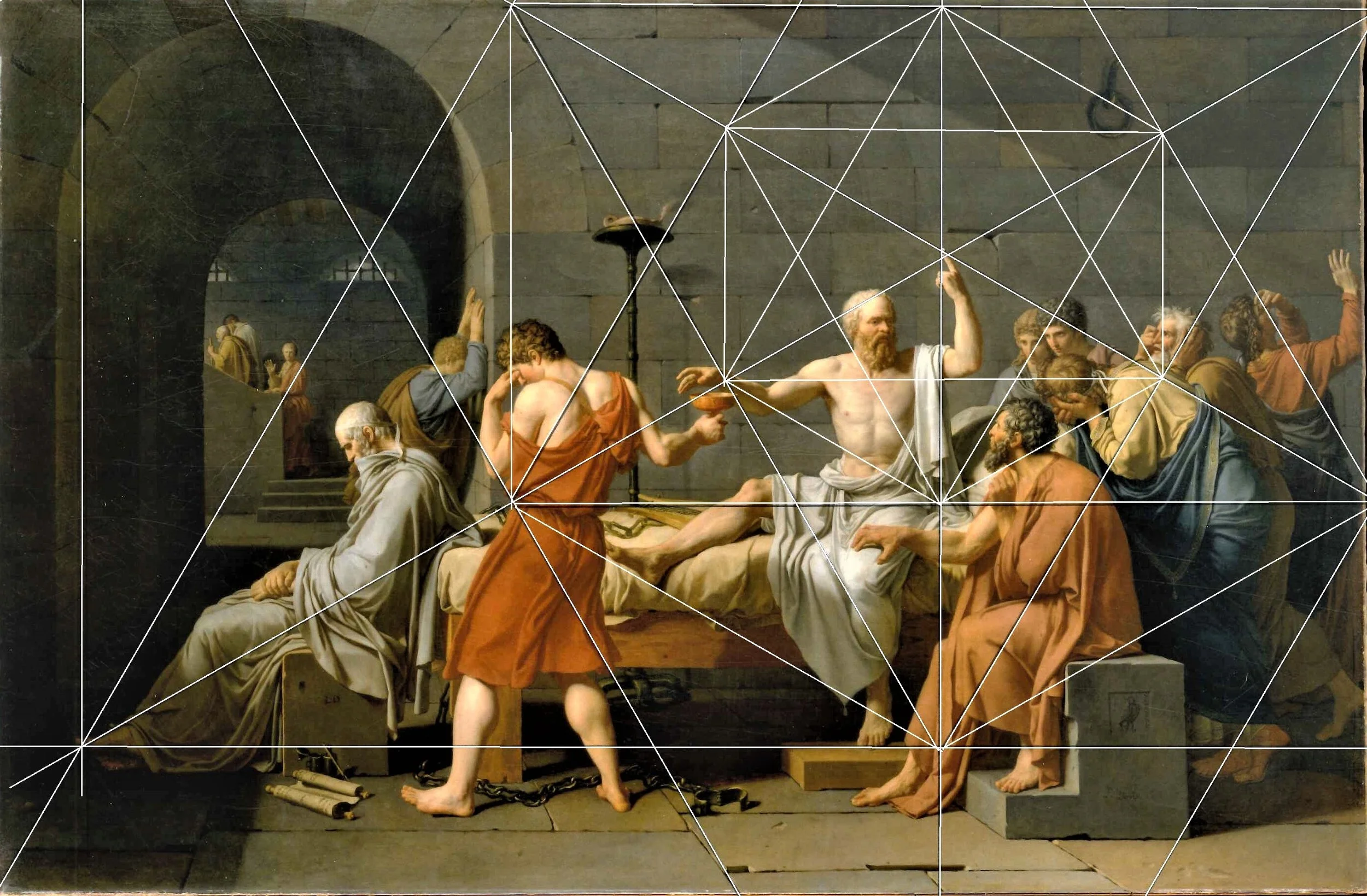
The Death of Socrates, Jaques Louis David, 1787
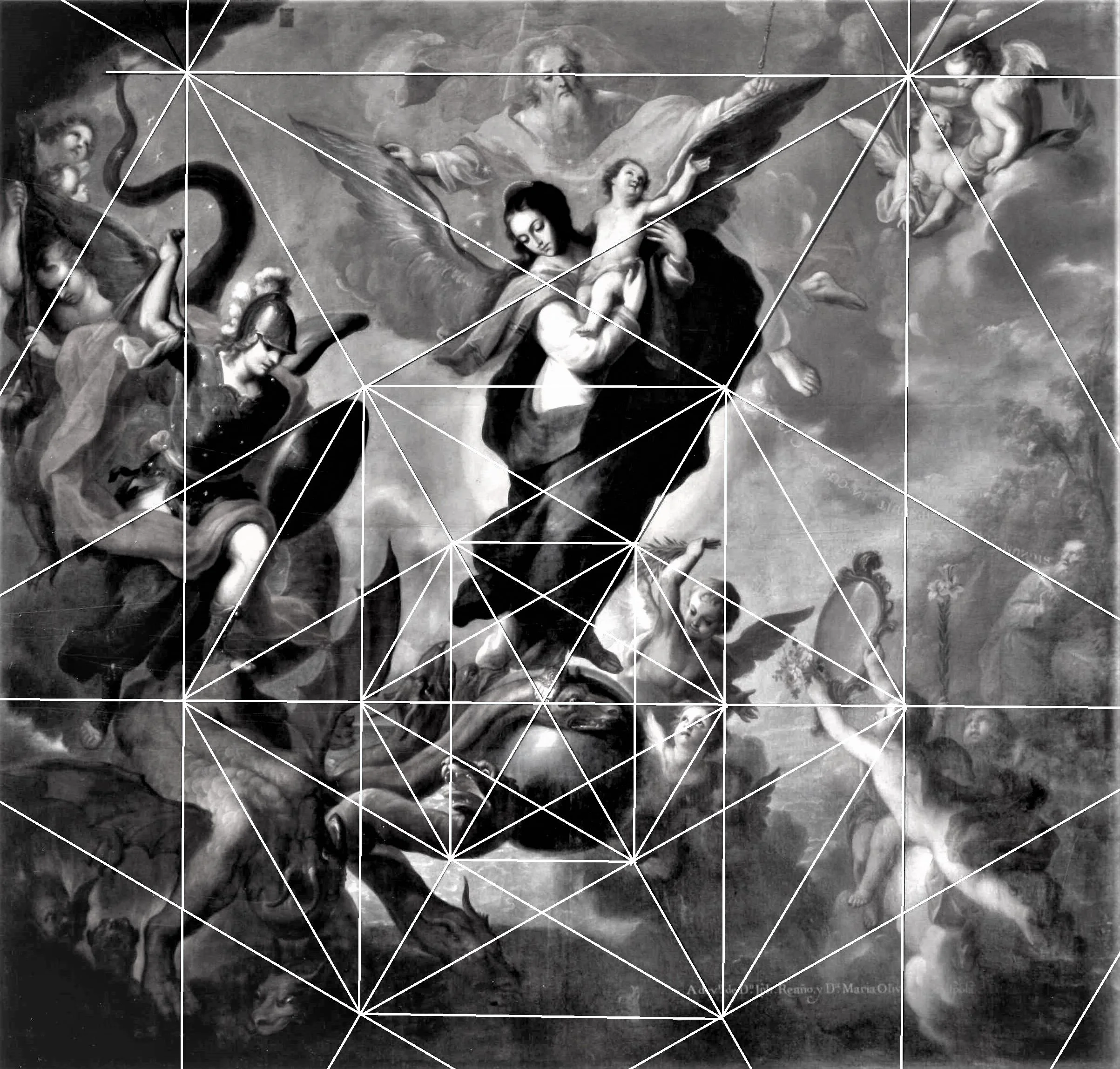
Virgin of the Apocalypse, Miguel Cabrera, 1760
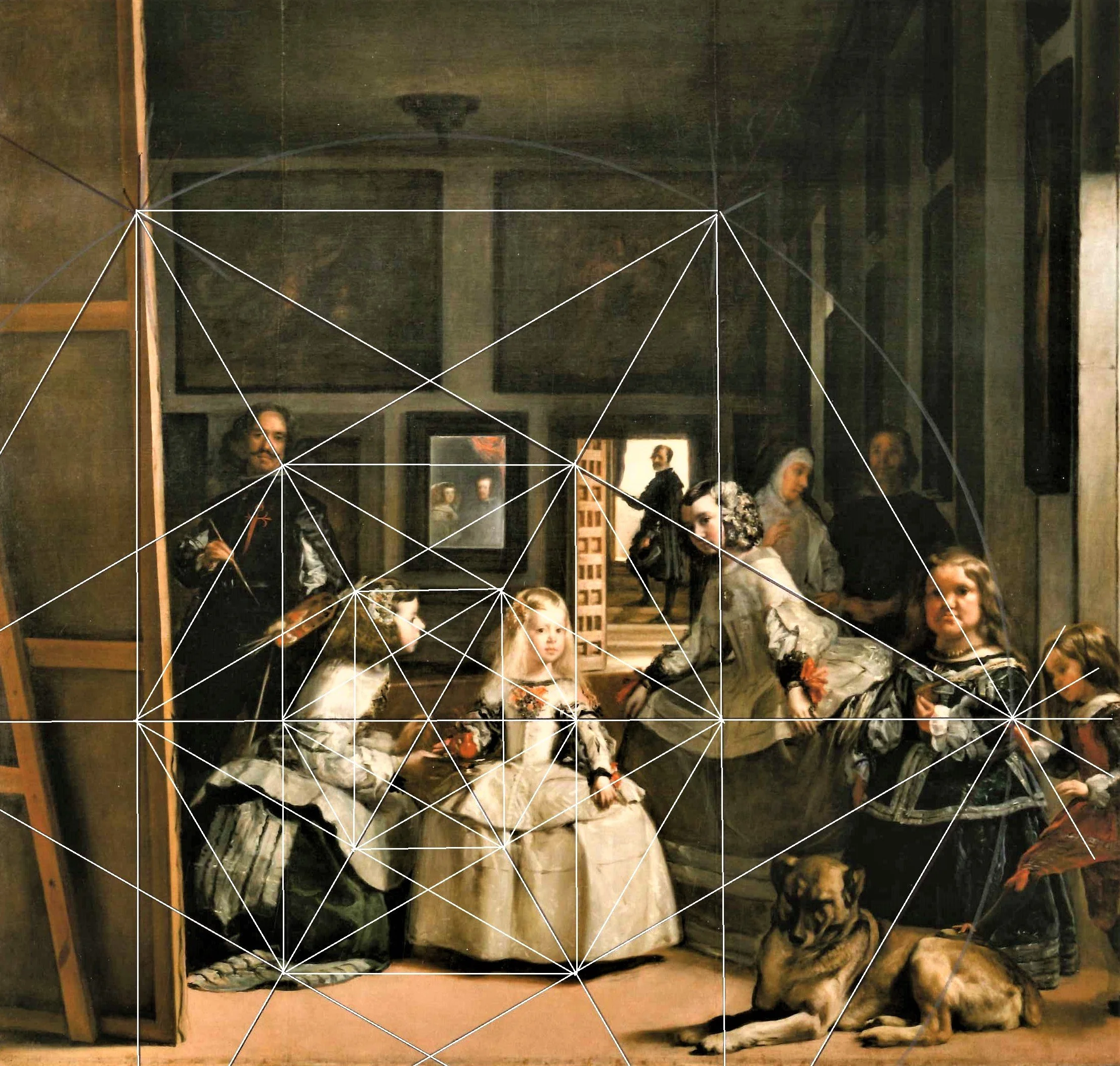
Las Meninas, Diego Velazquez, 1656
When you want to draw on a wall, first level the surface and then attach pieces of wood to the legs of a pair of metal compasses, to make them as long as you want, and tie a brush to one end so that you can mark with color the proportions of the figure and describe their halos. When you have marked the proportions of the figure, take some ochre and draw first with a watery solution. —Dionysius of Fourna, Painter's Manual, 1734
“Art is hiding art”
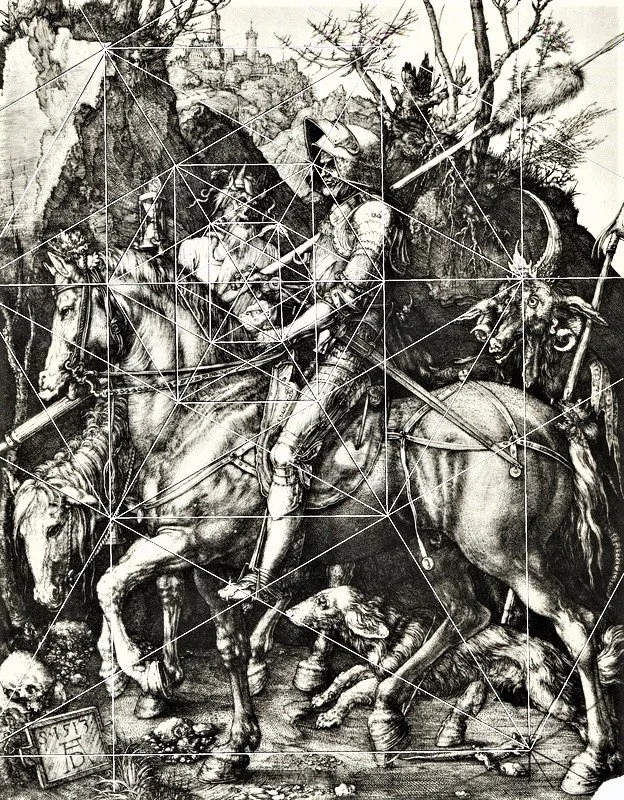
Albrecht Dürer, Knight, Death and the Devil (1513); it’s only about 9 ½ inches tall, remarkable for an engraving with such detail. There is a small lizard in the lower right-hand corner, that and the knight’s index finger were the two points I used, and they happen to lay a grid that’s perfectly oriented.
Considering, however, that this is the true foundation for all painting, I have proposed myself to propound the elements for the use of all eager students of Art, and to instruct them how they may employ a system of Measurement with Rule and Compass, and thereby learn to recognize the real Truth, seeing it before their eyes. —Albrecht Dürer, The Painter’s Manual (1525)
Michelangelo thought Dürer’s reliance on geometry was excessive, and is reported by Vasari to have said “It is necessary to keep one's compass in one's eyes and not in the hand, for the hands execute, but the eye judges.”
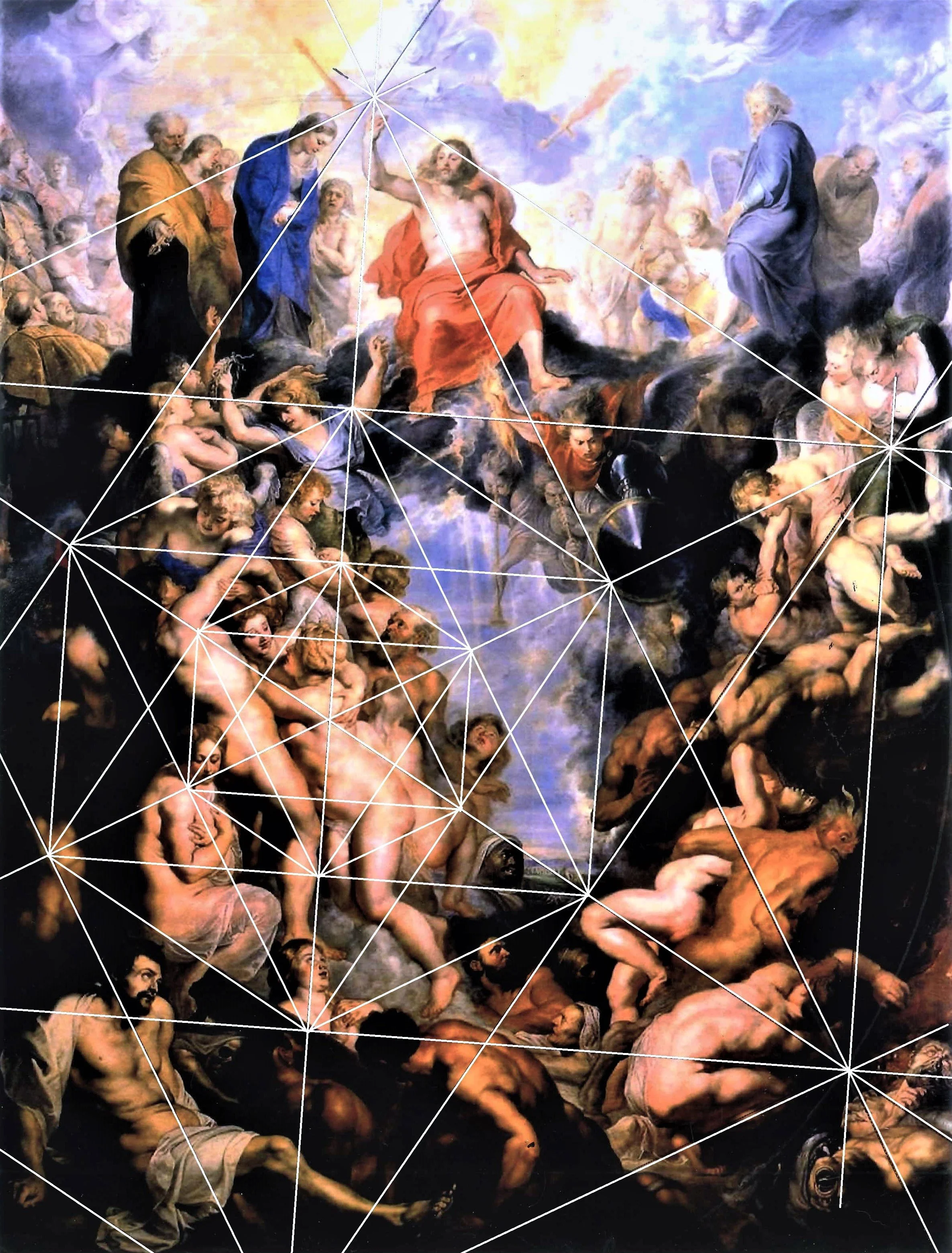
Last Judgment, Rubens, 1617
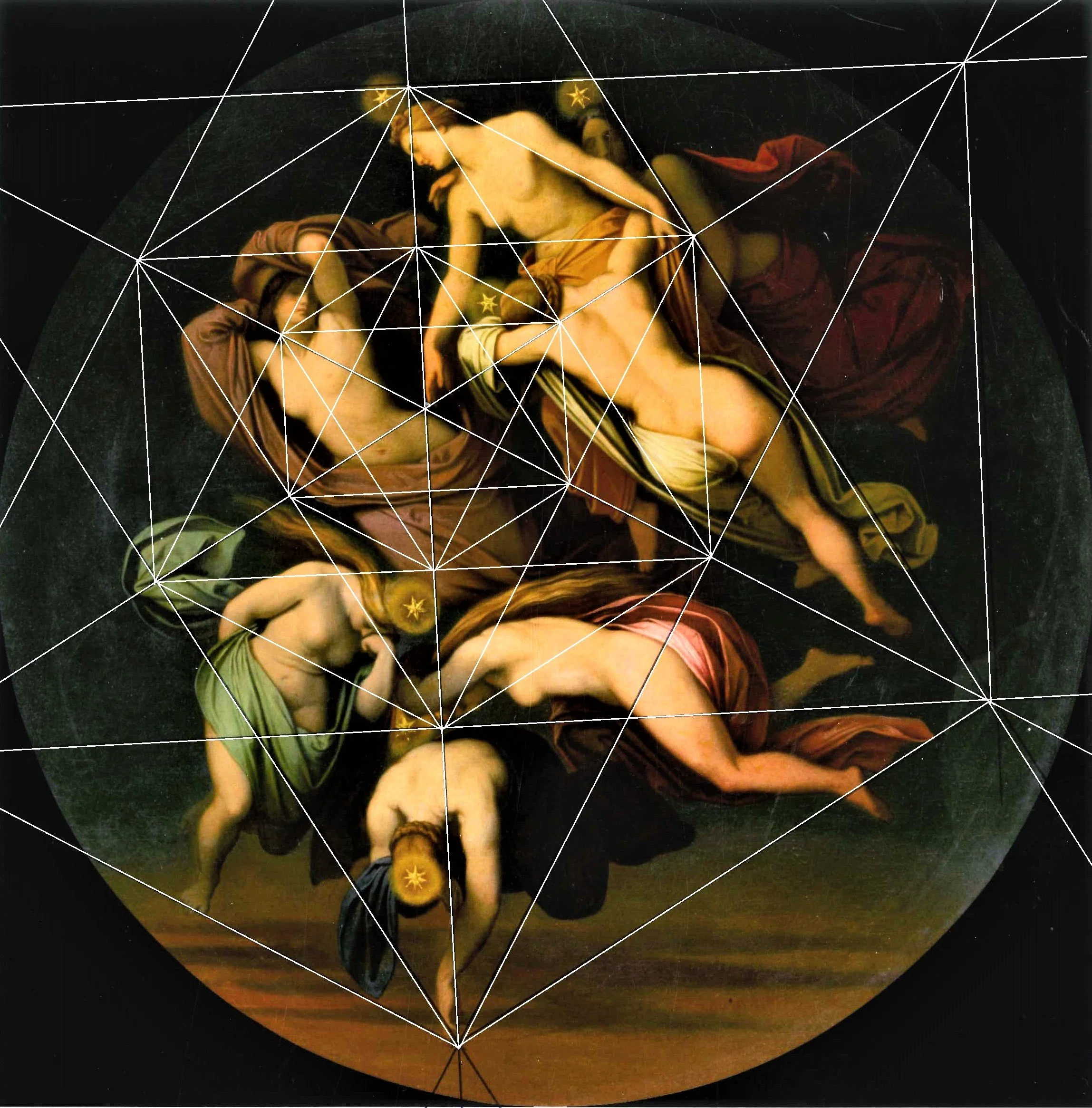
Die Plejaden (The Pleiades), Moritz von Schwind, 1855
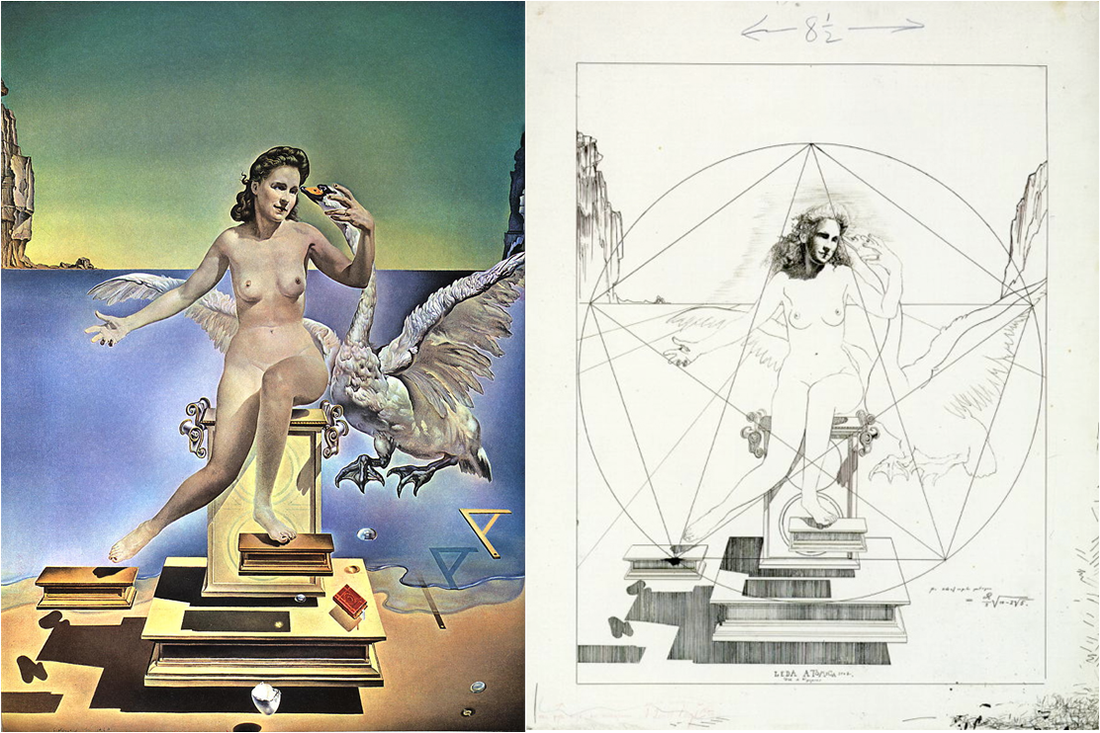
Fifty Secrets of Magic Craftsmanship, Salvador Dali:
As I do not wish you to spend days and killing hours which you might devote to painting at your mathematical calculations, I shall now reveal to you the secret of the compass—and this is Secret Number 47—by means of which you will be able automatically to find as many golden sections as you wish, without having recourse to the painful geometric operation for which you often need an immense compass, requiring that you go beyond the area of your painting, and this is often so inconvenient that your laziness will counsel you at last to get along without such a proportion... And the fact that such compasses are not currently for sale at paint dealers is but the proof of the lack of geometric rigor of schools of art, and of modern painters in particular.
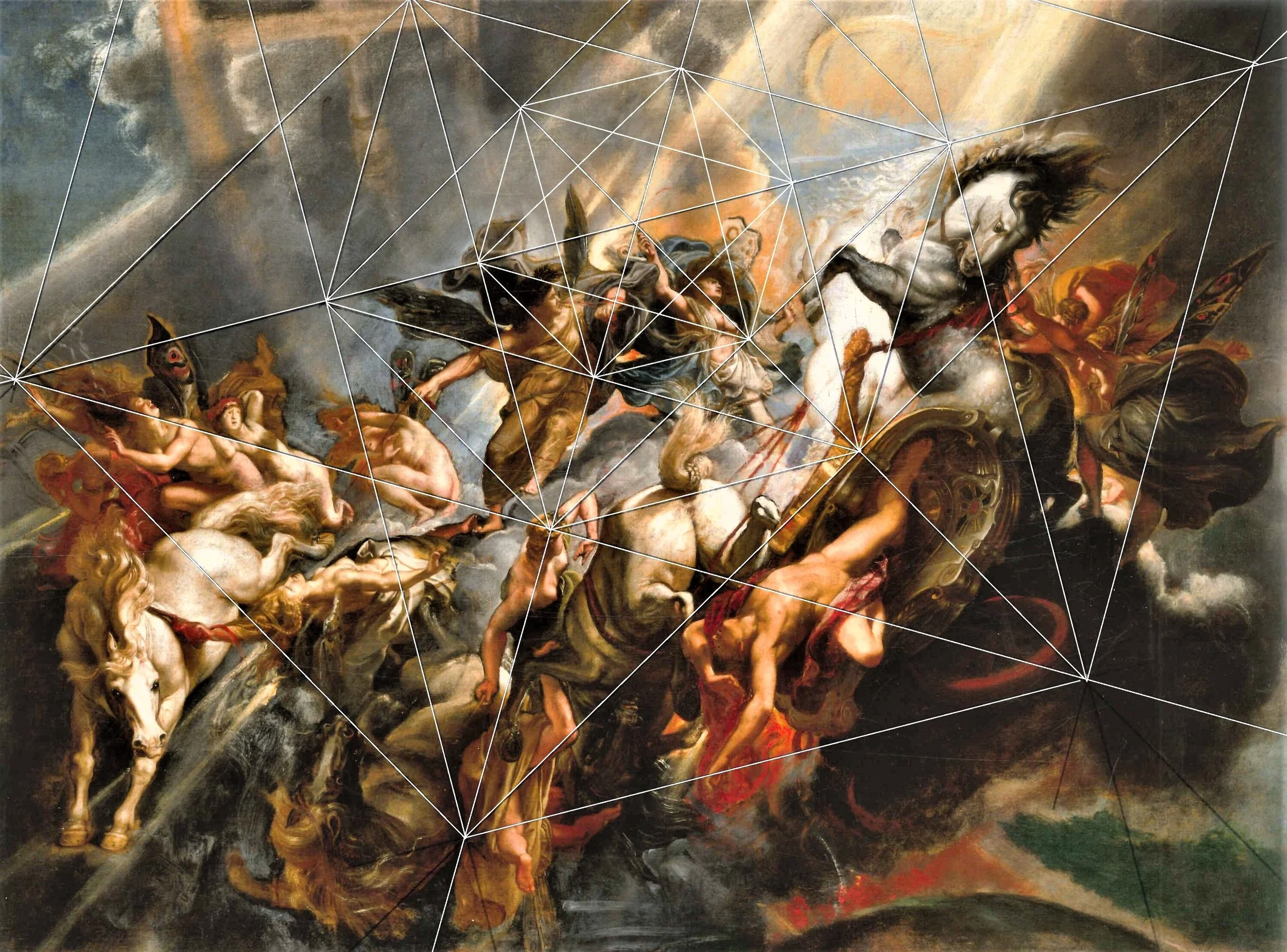
The Fall of Phaeton, Rubens, 1605
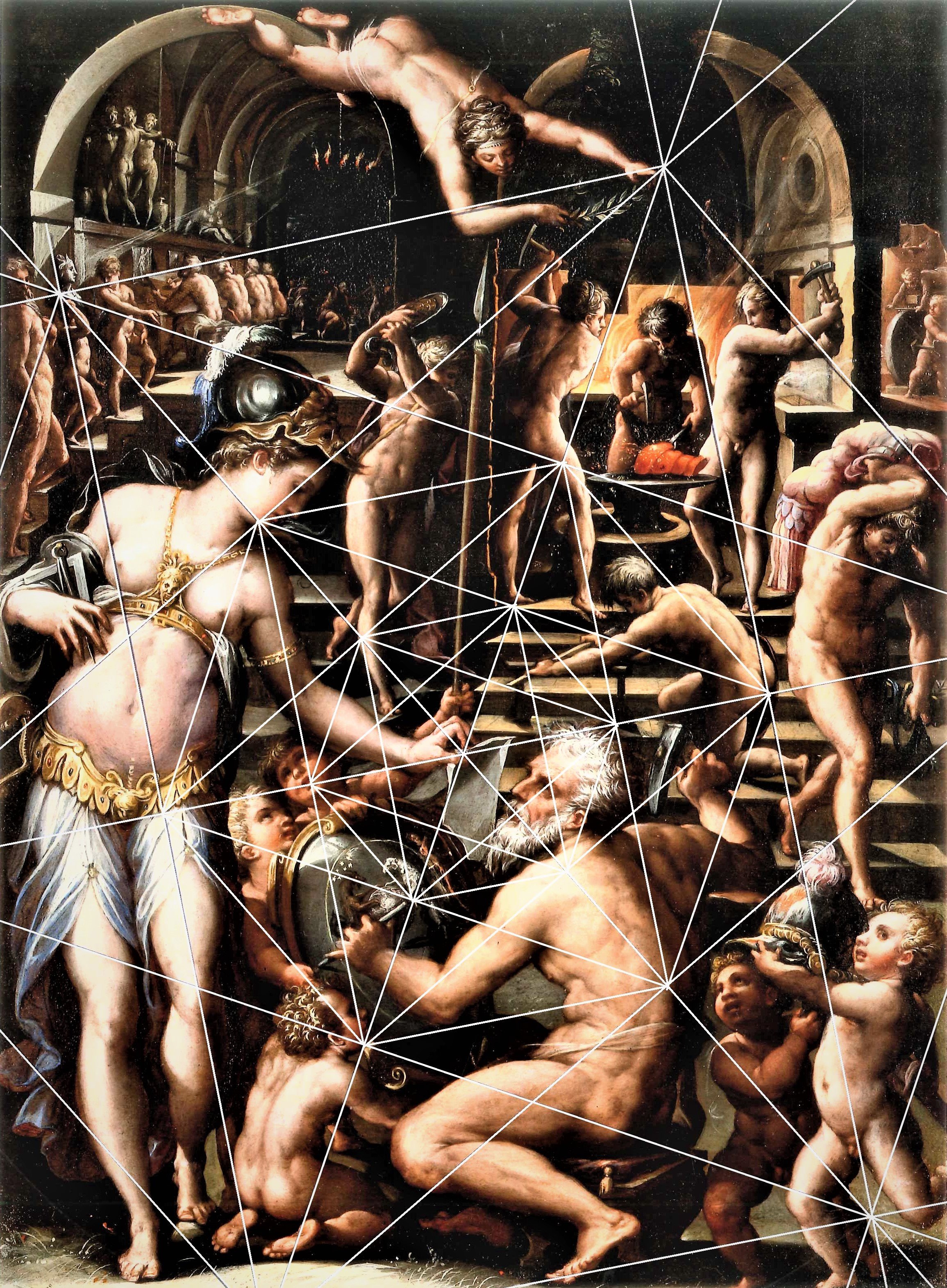
Forge of Vulcan, Giorgio Vasari, 1564
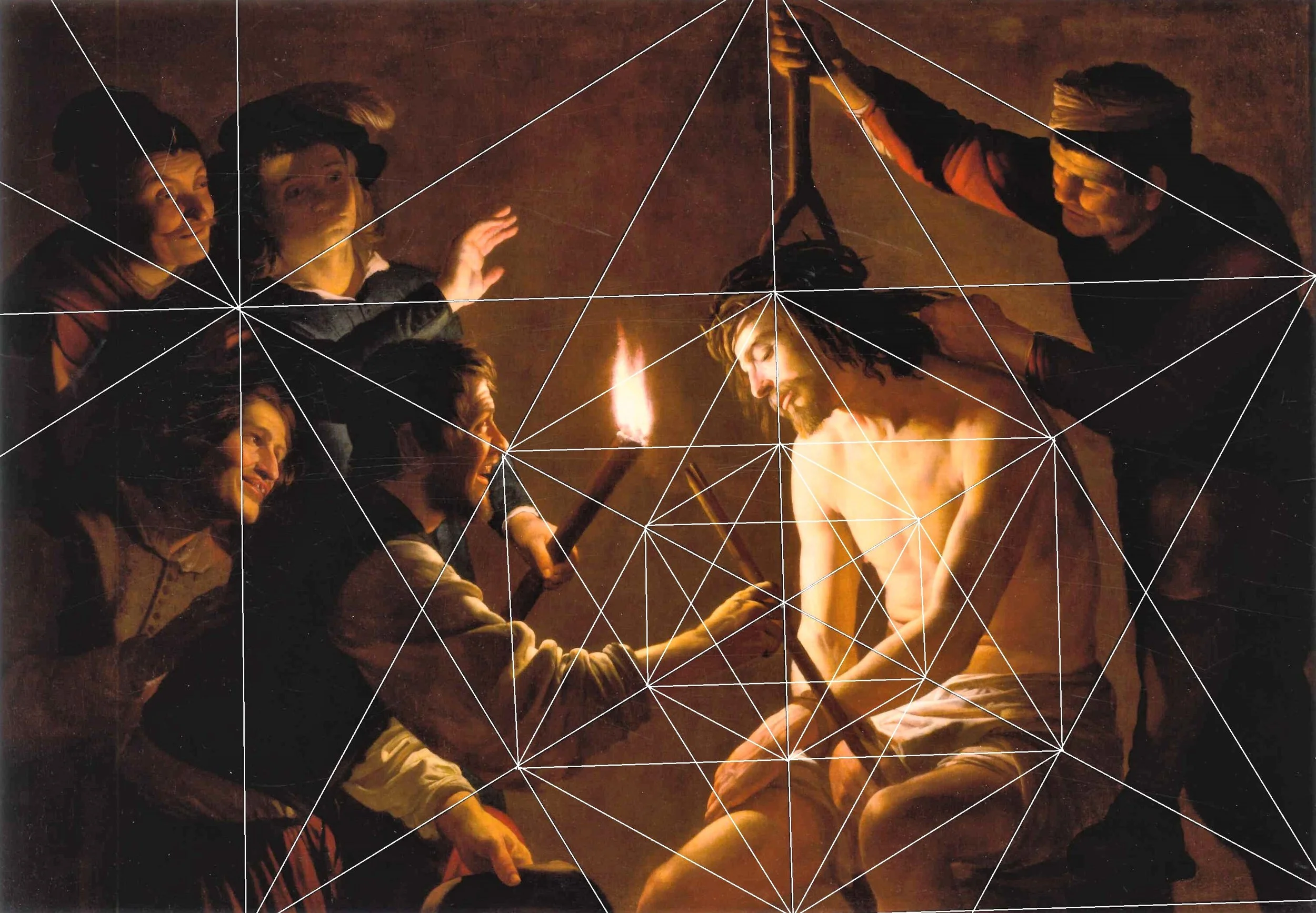
The Mocking of Christ, Gerard van Honthorst, 1617
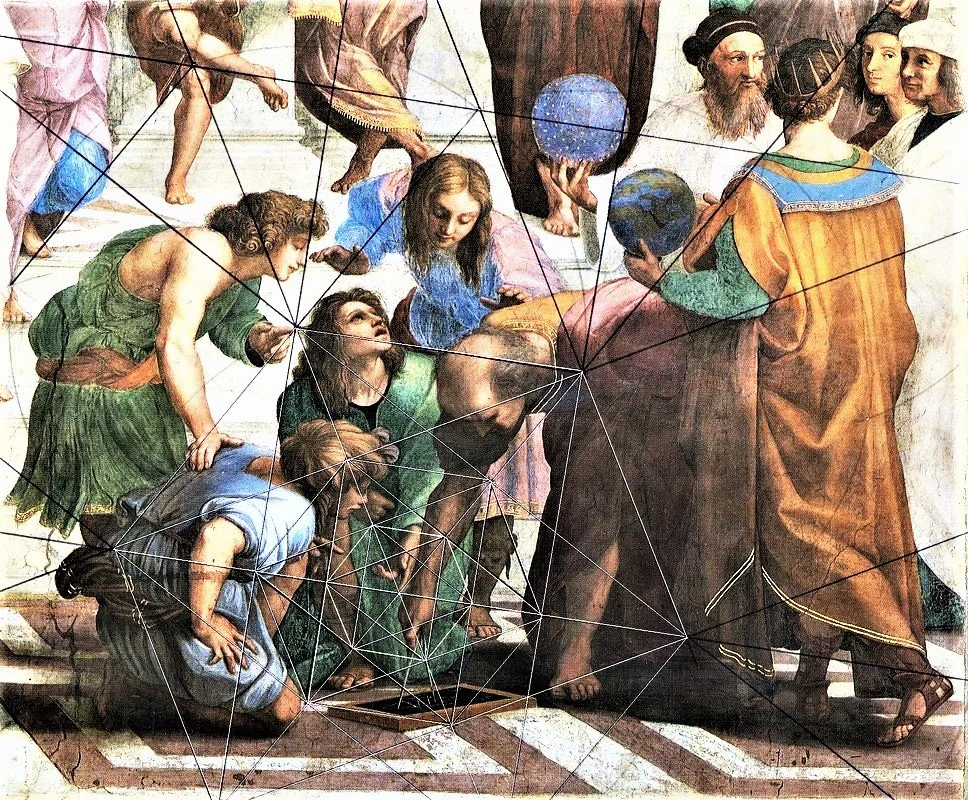
School of Athens, Raphael, 1511
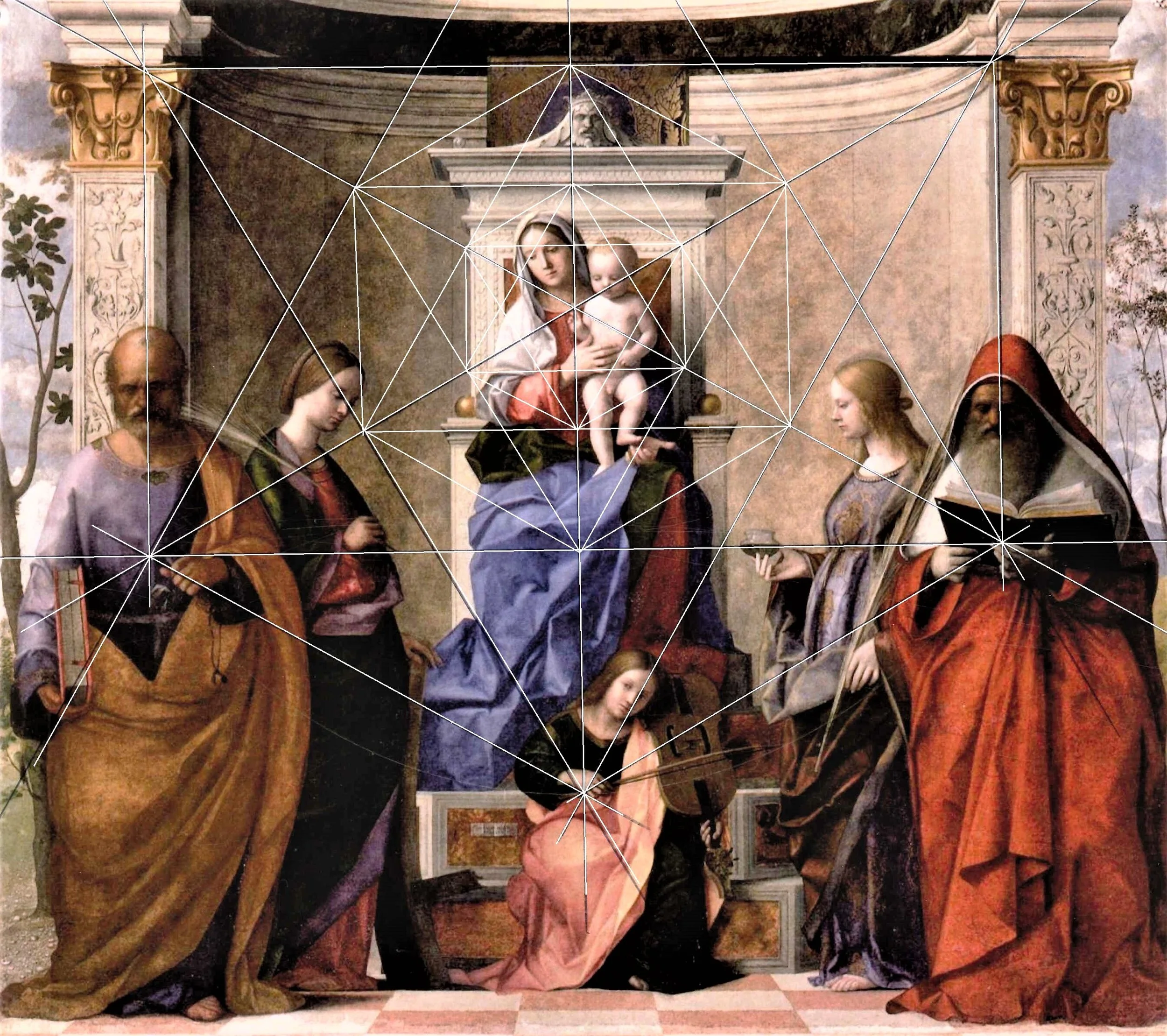
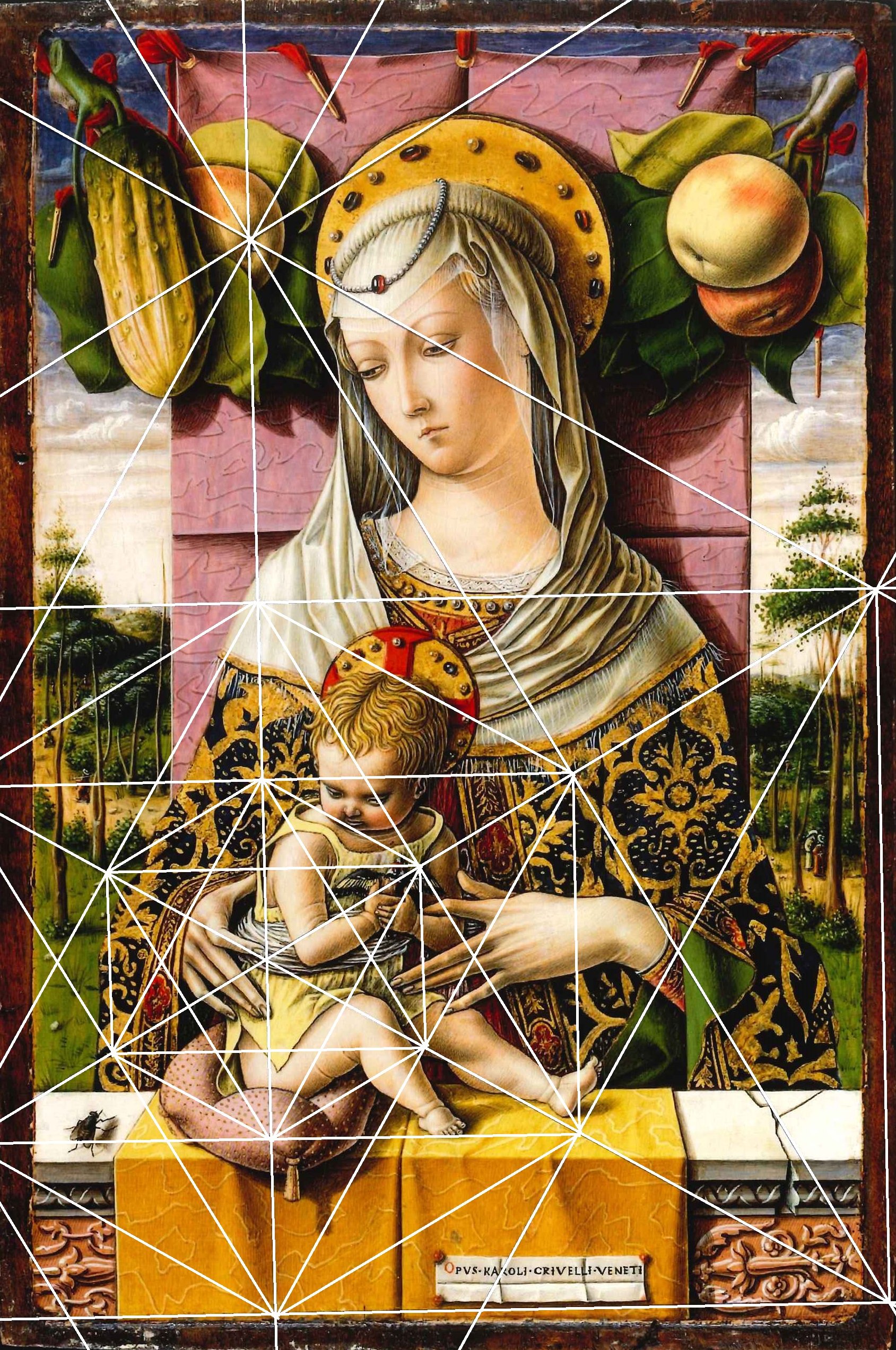
Lenti Madonna, Carlo Crivelli 1480
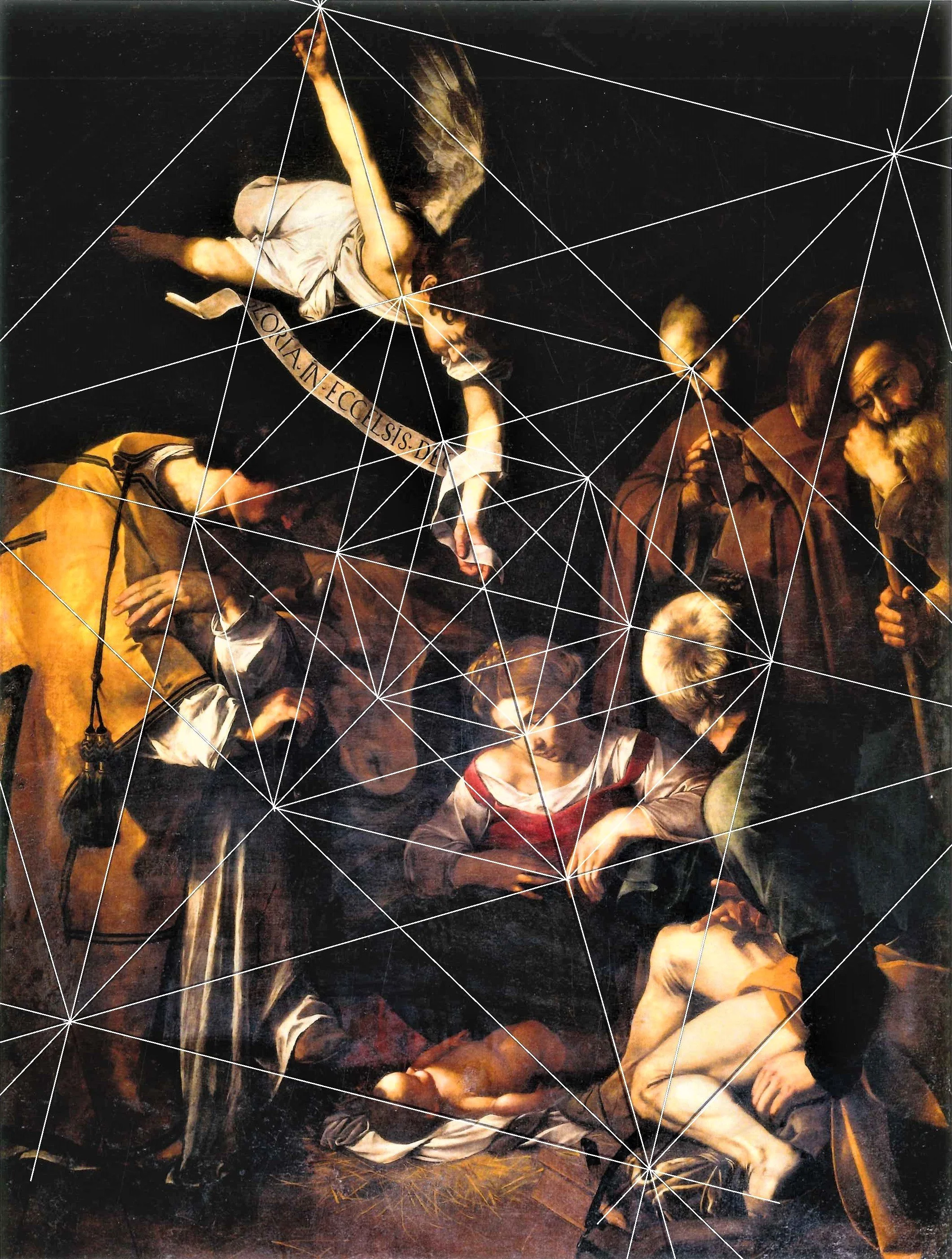
Nativity with Saint Francis and Saint Lawrence, Caravaggio 1609
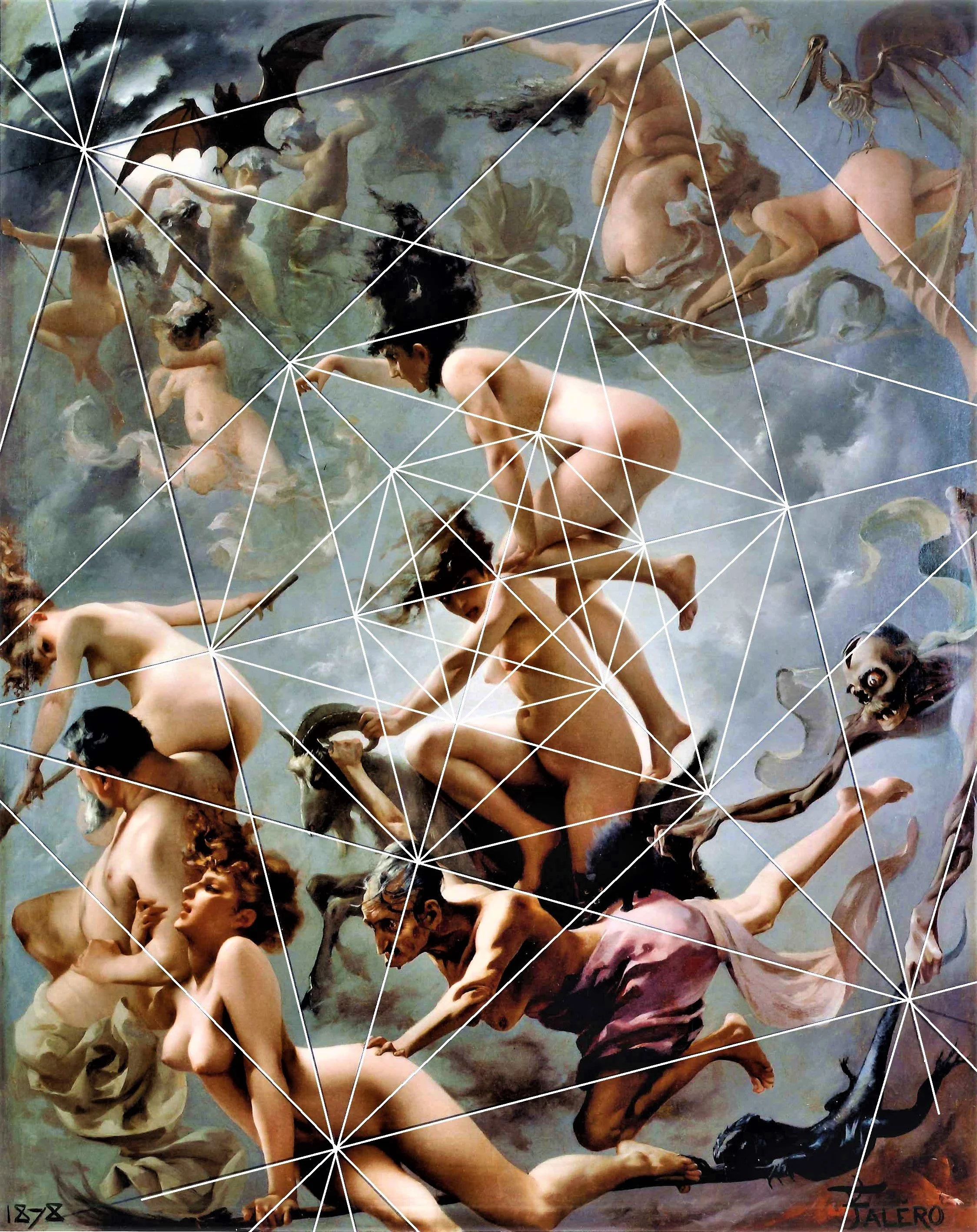
The Witches Going to Their Sabbath, Luis Ridardo Falero, 1878
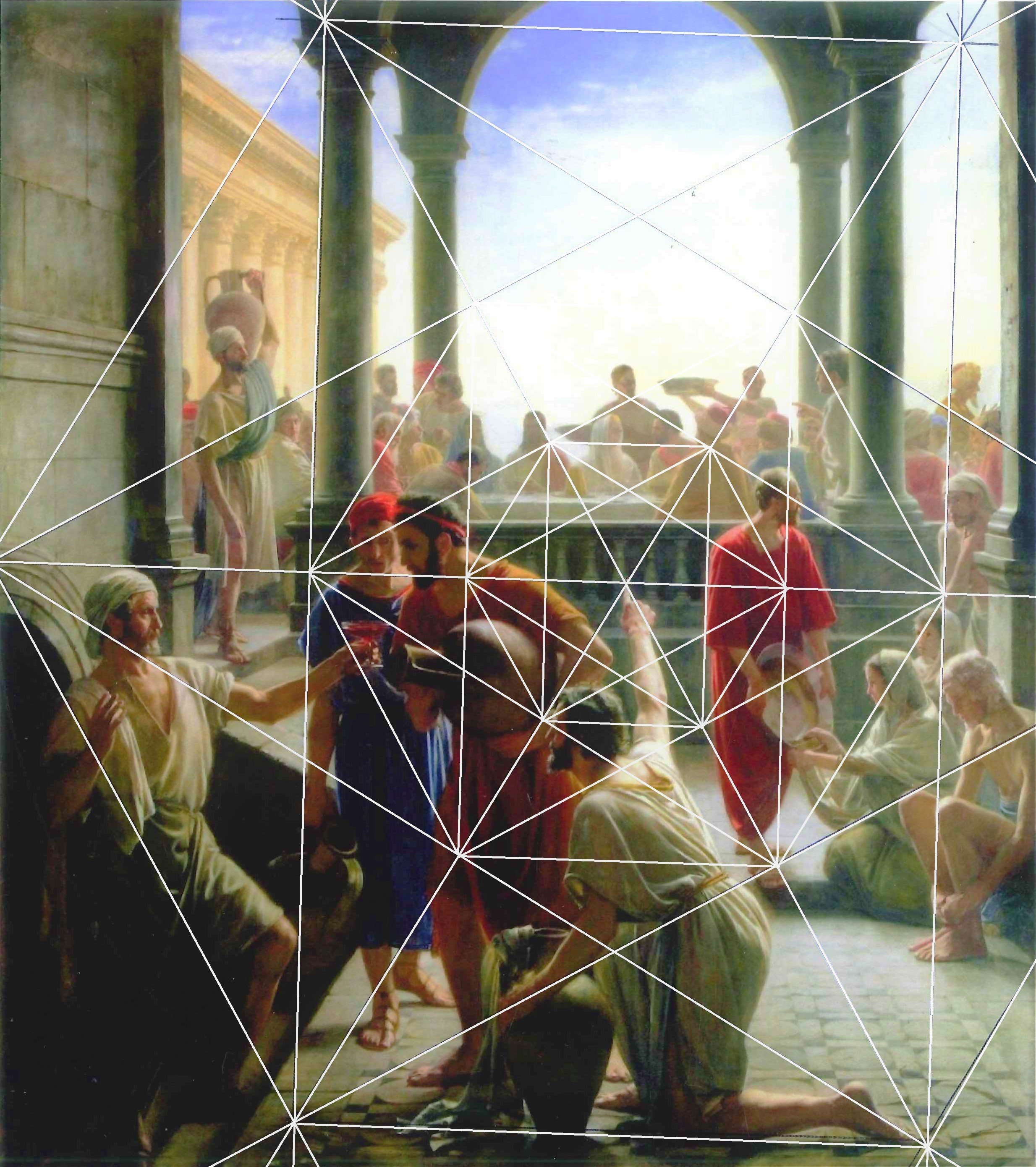
The Wedding at Cana, Carl Bloch, 1870
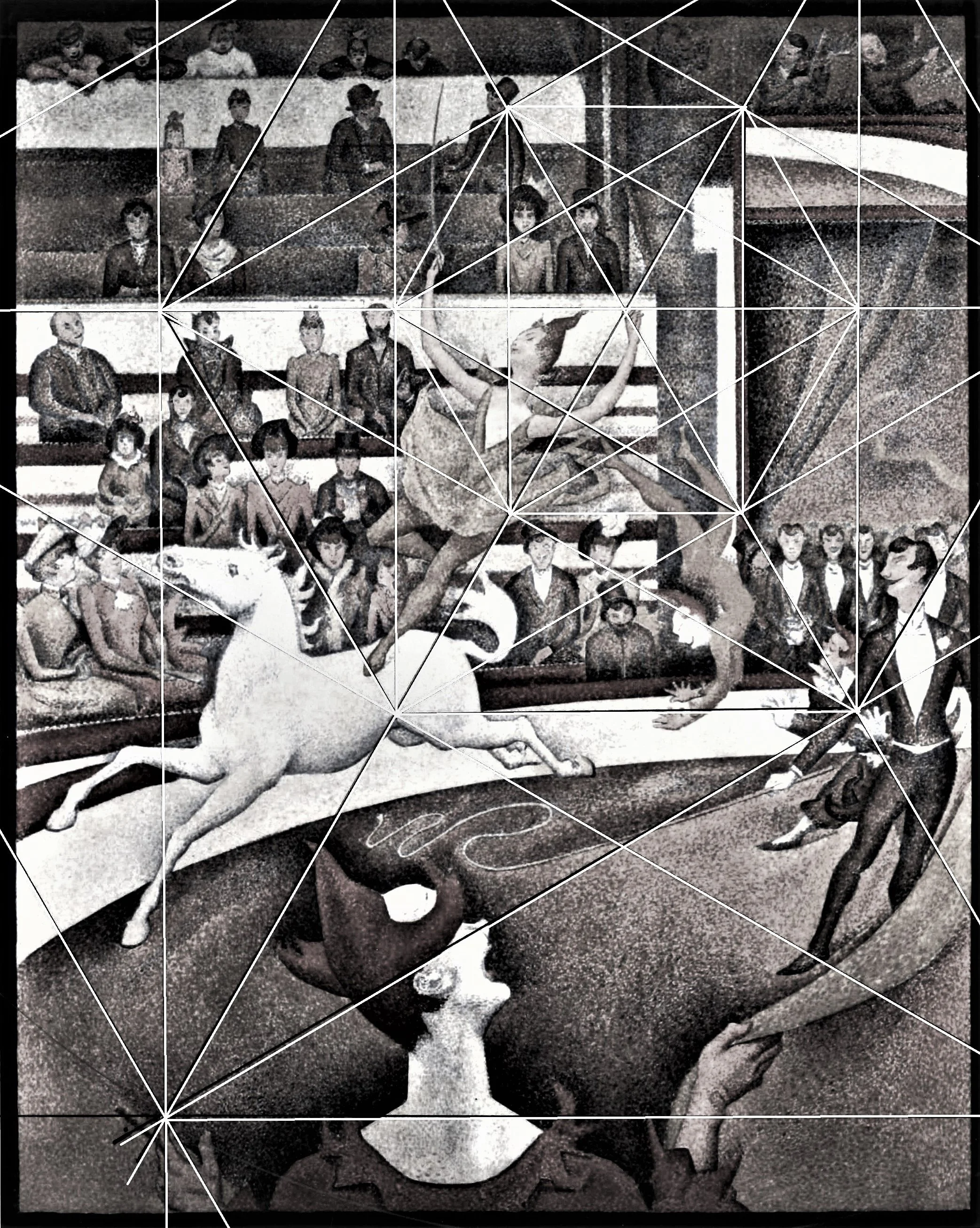
The Circus, Georges Seurat, 1891
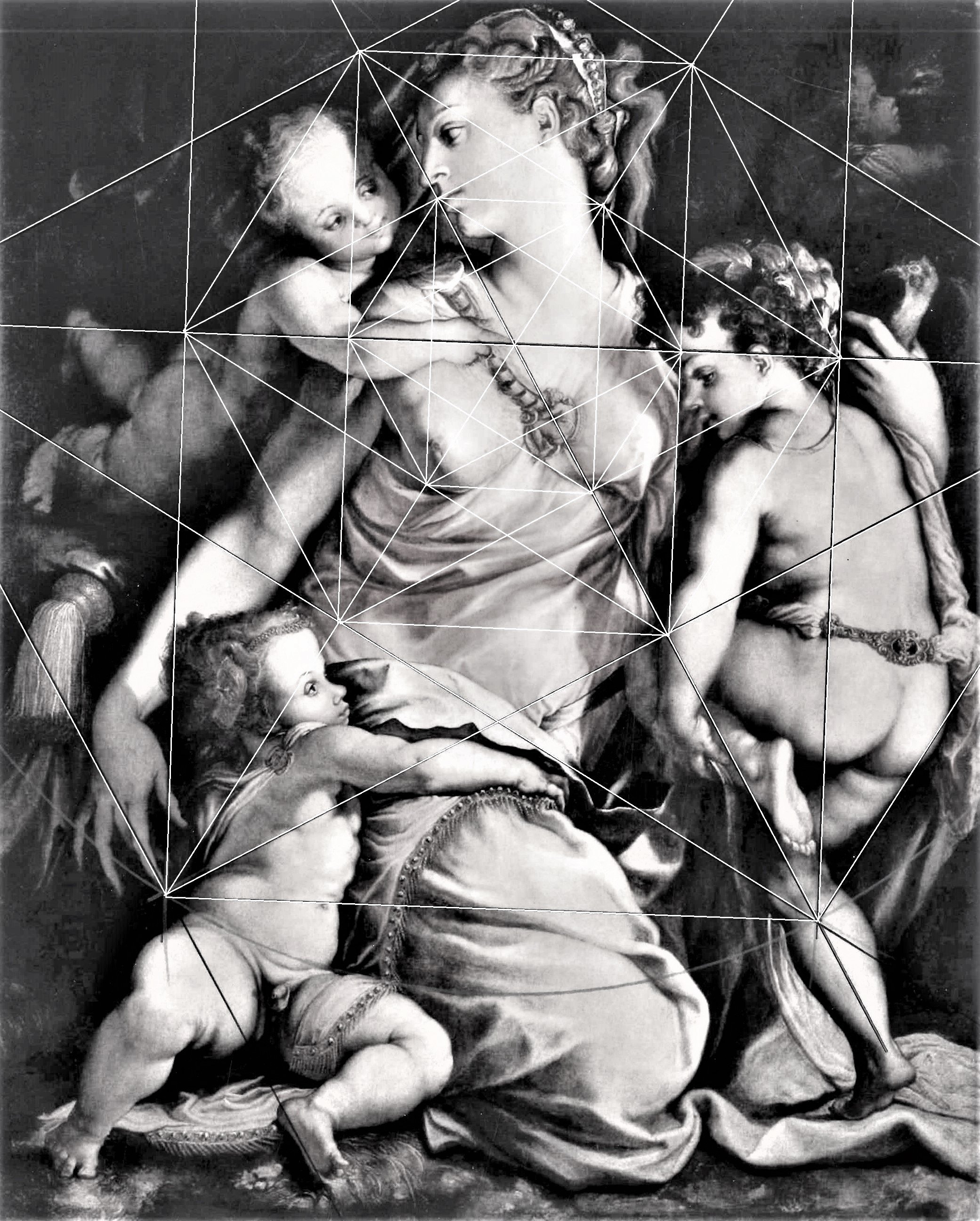
Charity, Francesco Salviati, 1548
Madonna Enthroned with Child and Saints, Giovanni Bellini 1605
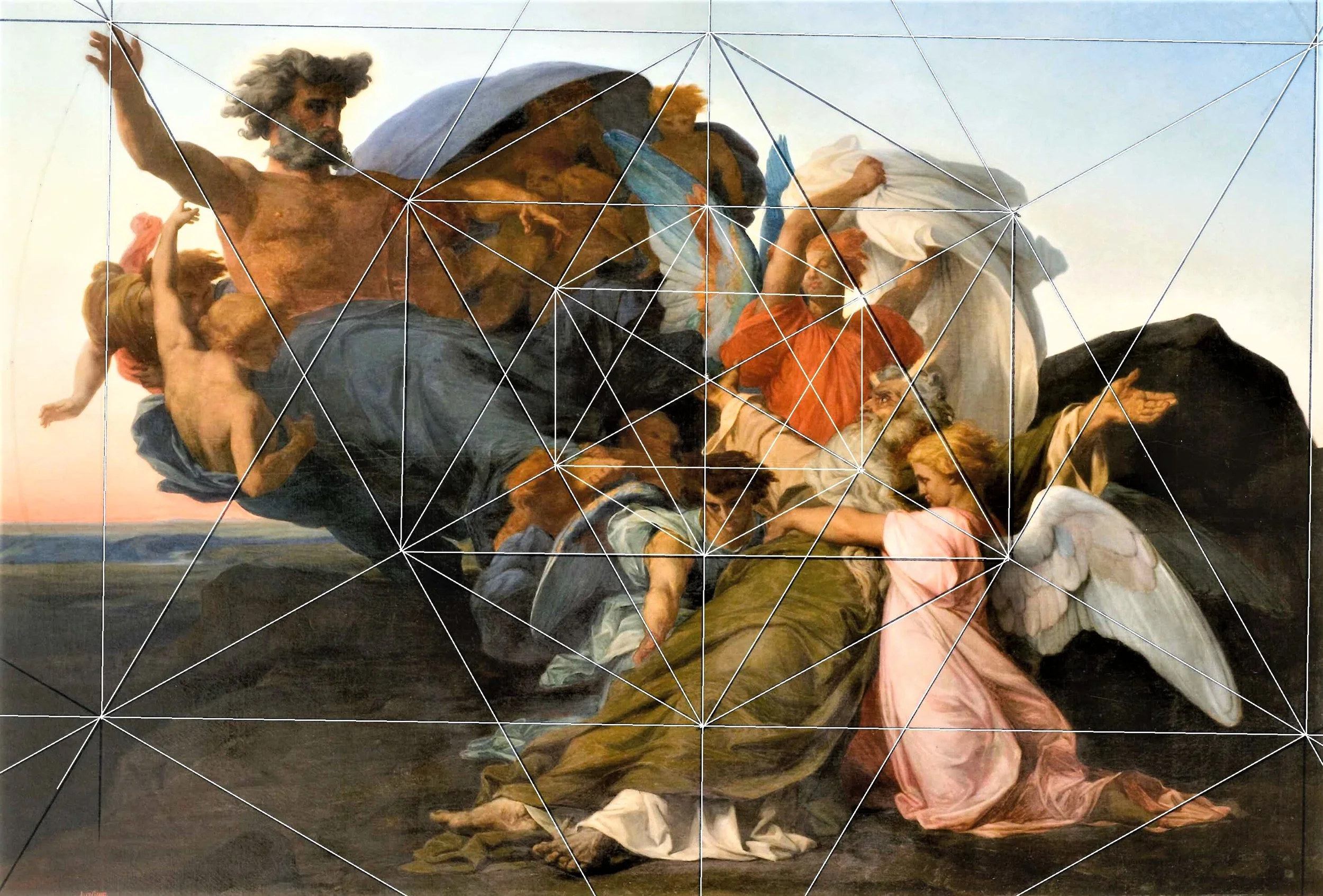
The Death of Moses, Alexandre Cabanel 1851
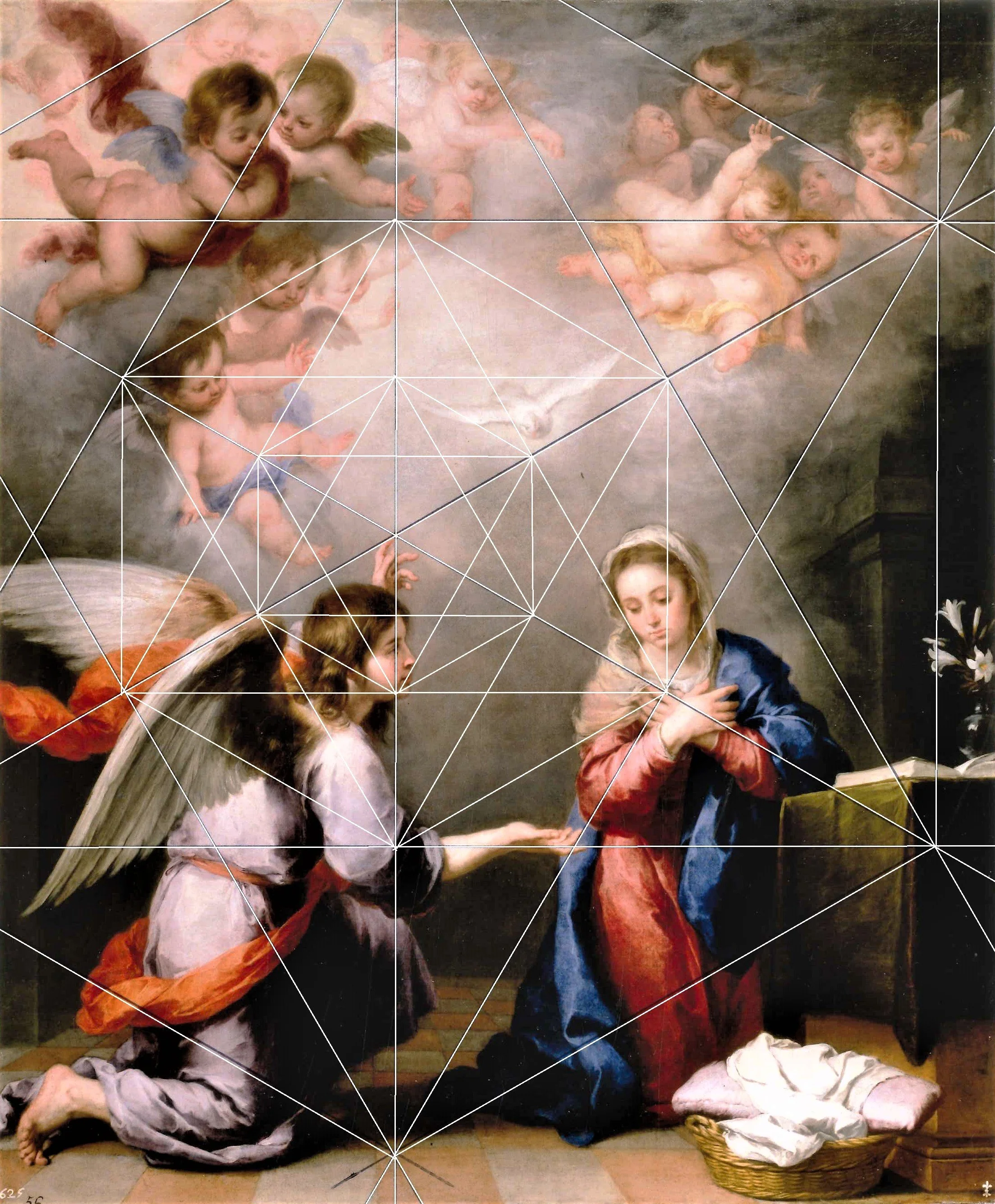
Annunciation, Bartolomé Esteban Perez Murillo, 1660
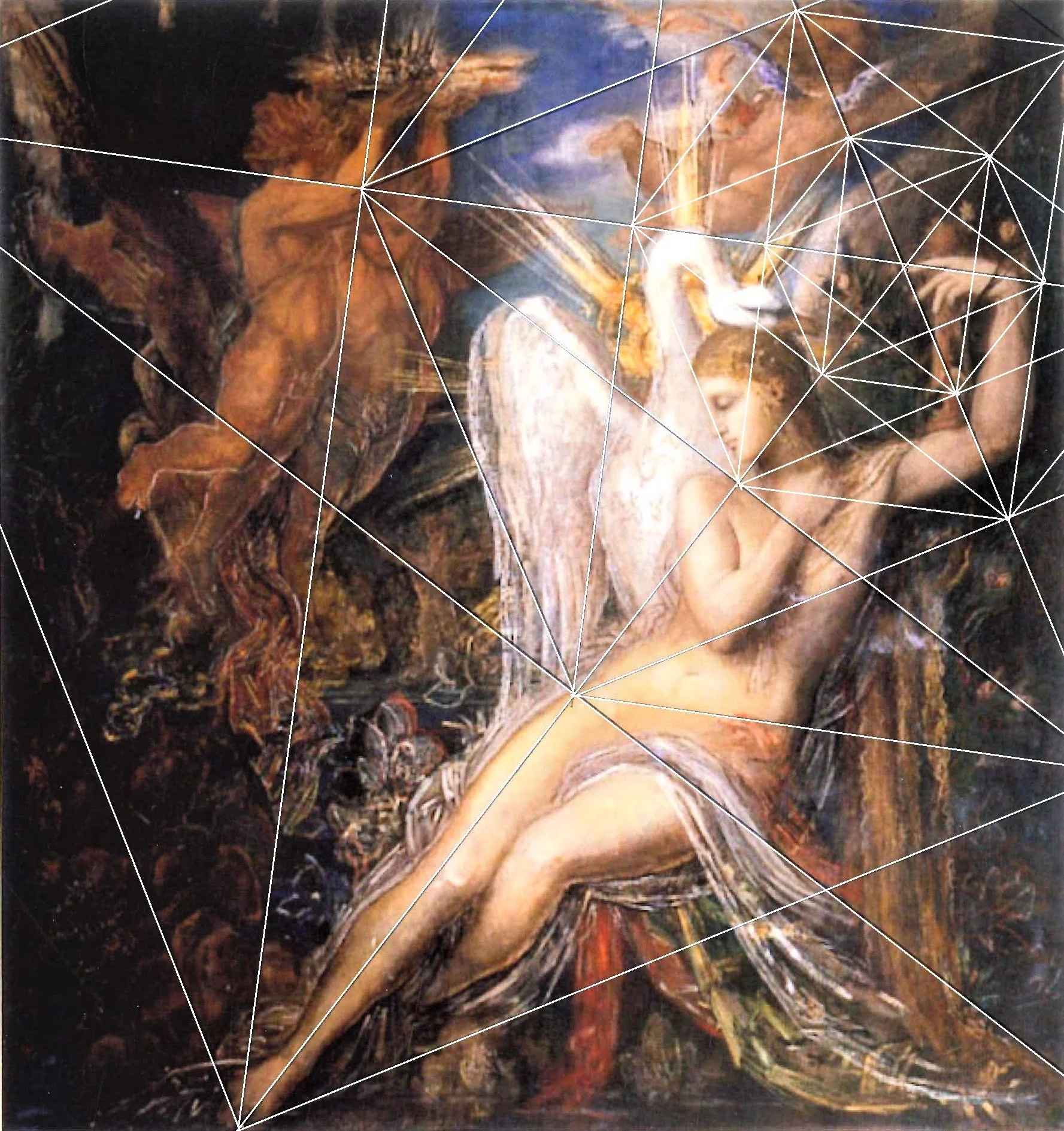
Leda and the Swan, Gustave Moreau 1882
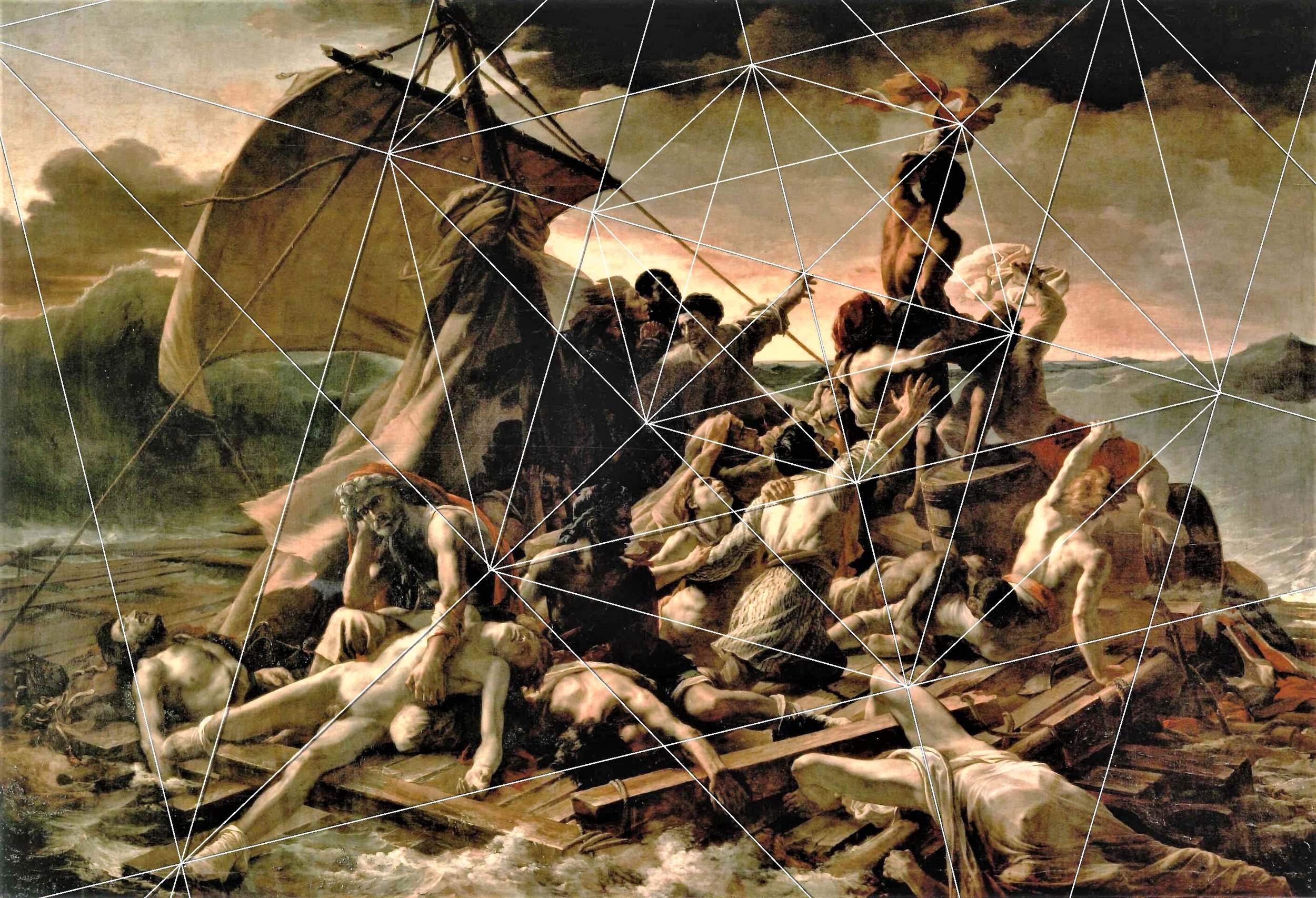
The Raft of the Medusa, Théodore Géricault, 1819
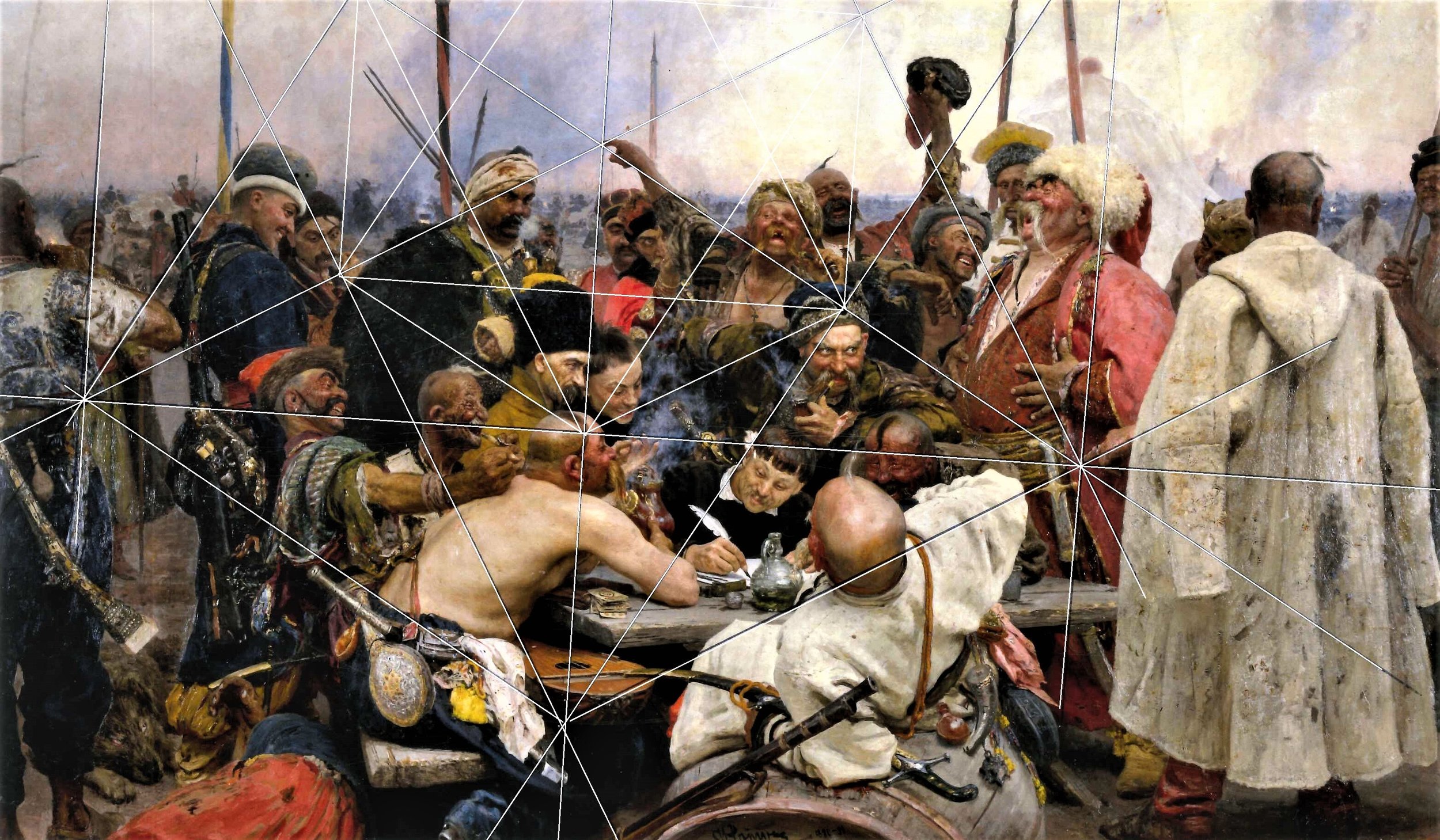
Reply of the Zaporozhian Cossacks, Ilya Repin, 1891
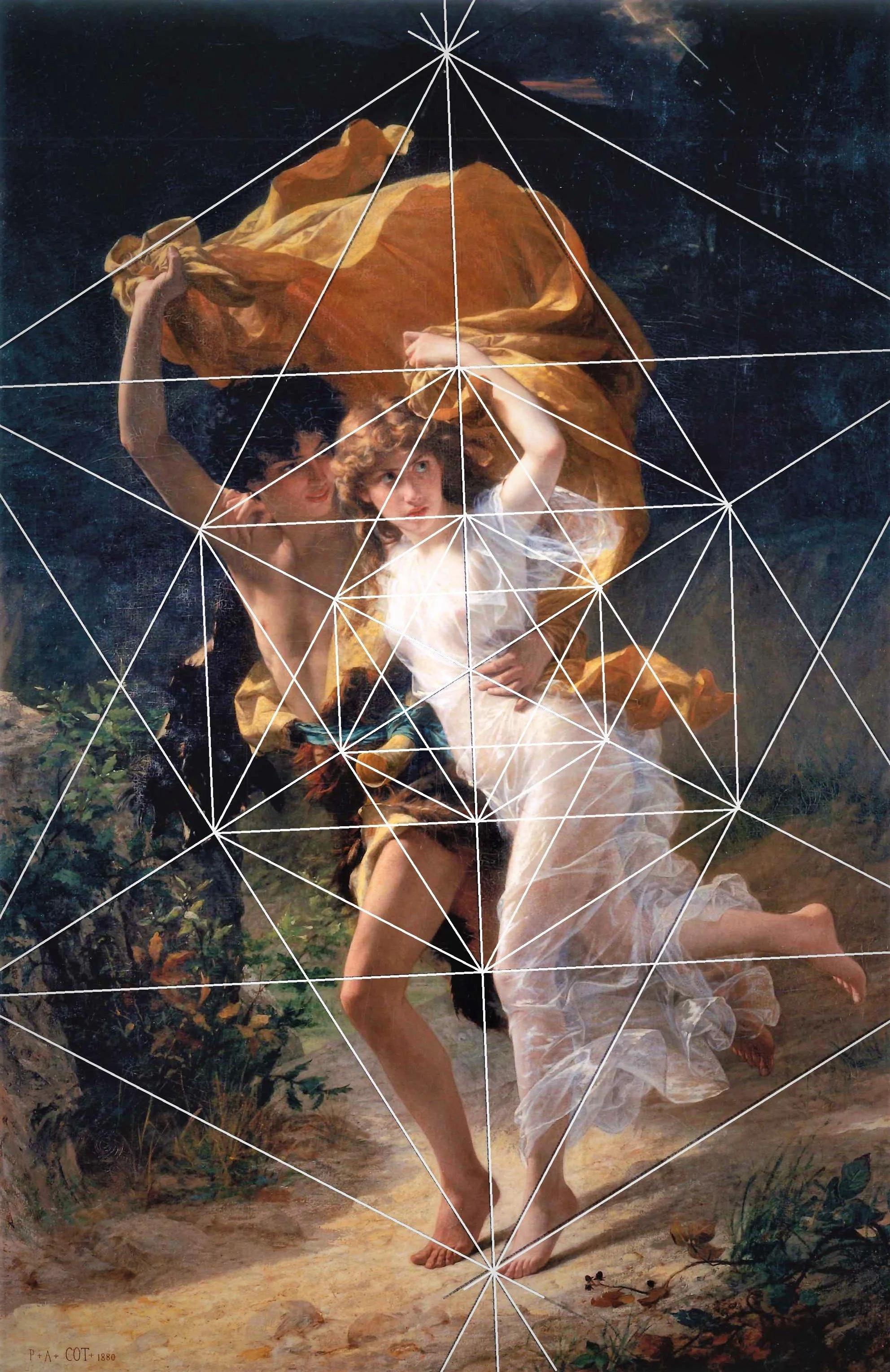
The Storm, Pierre Auguste Cot, 1880
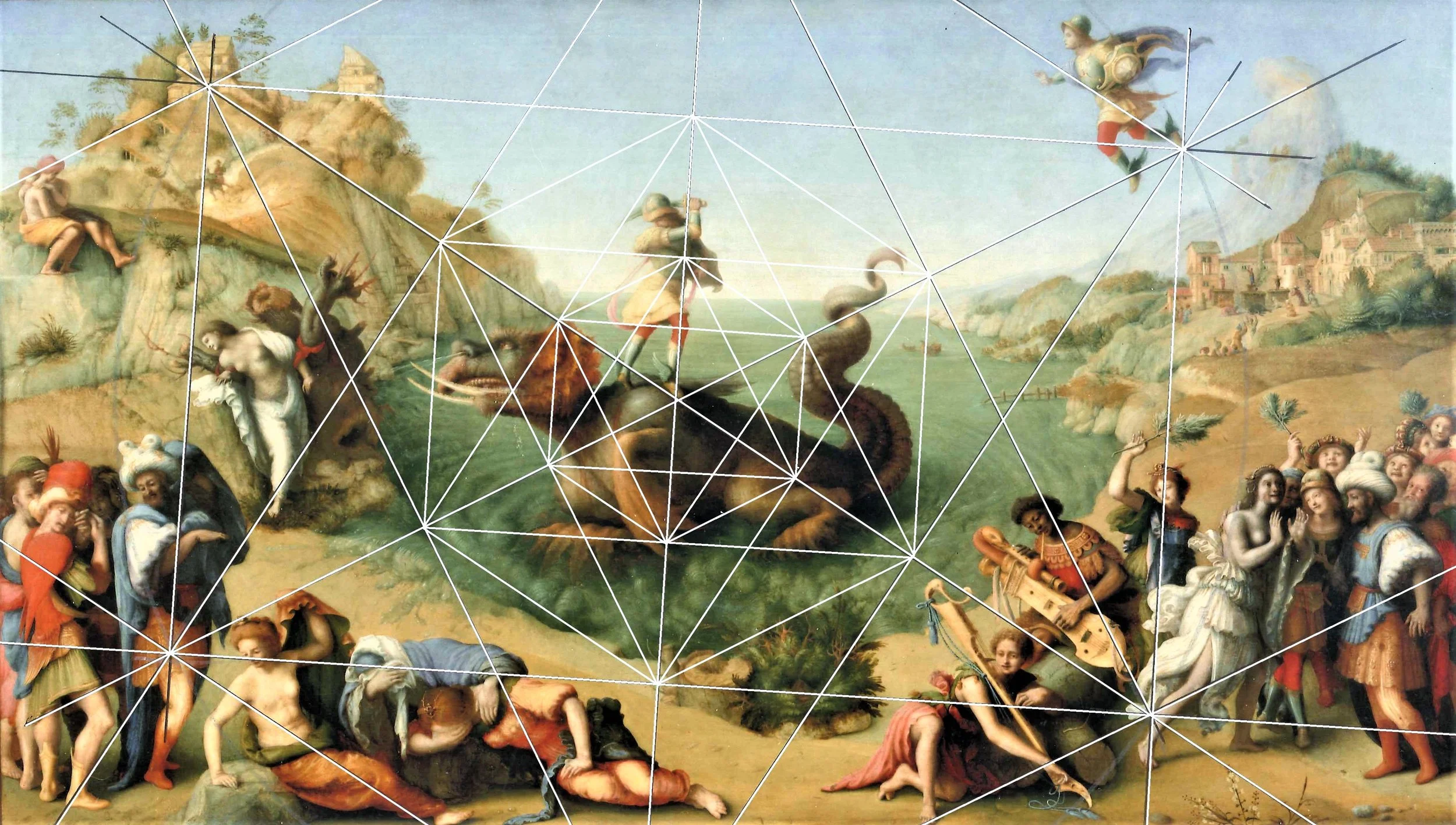
The Liberation of Andromeda, Piero di Cosimo, 1510
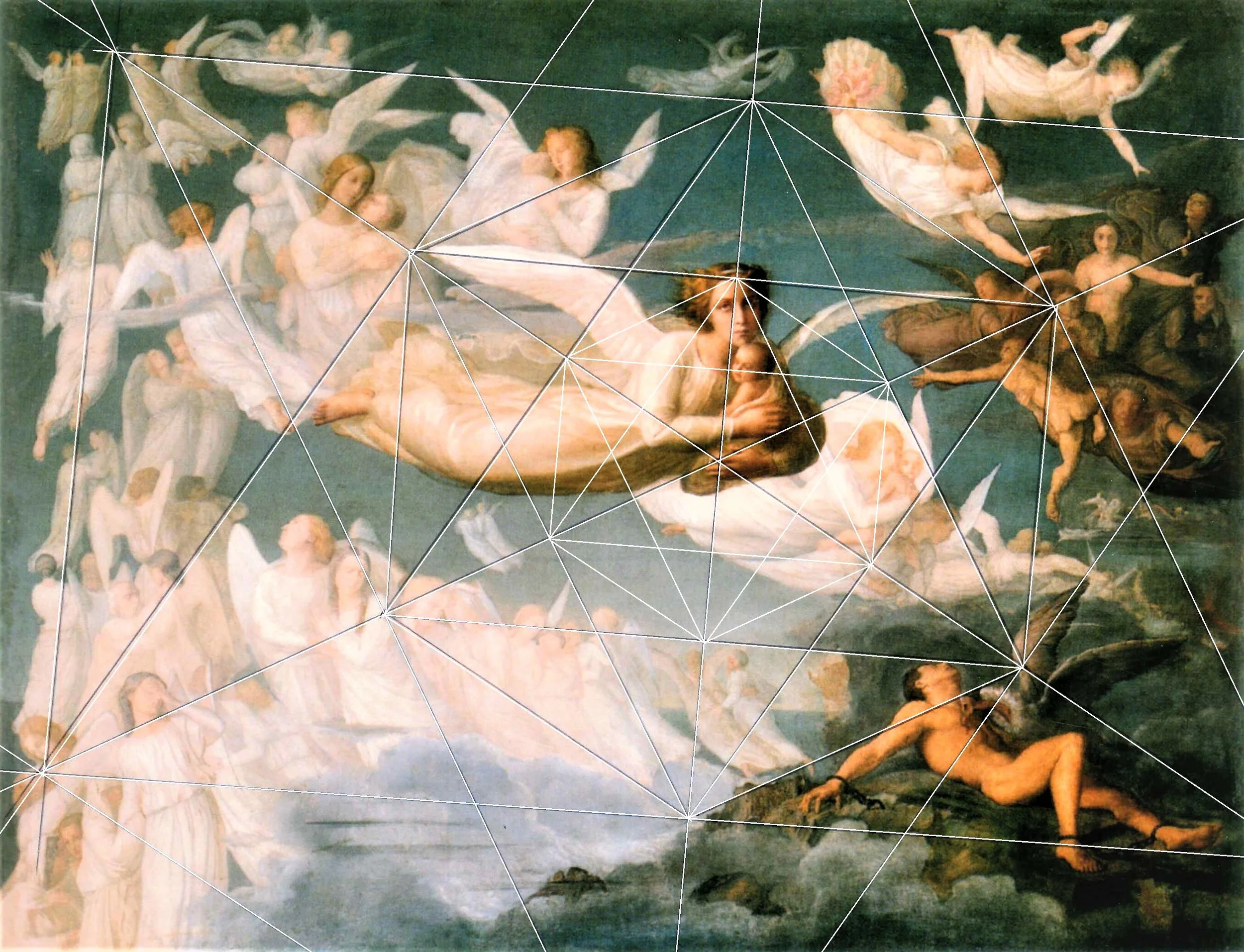
Le Passage des âmes (The Passage of the Soul), Louis Janmot, 1854
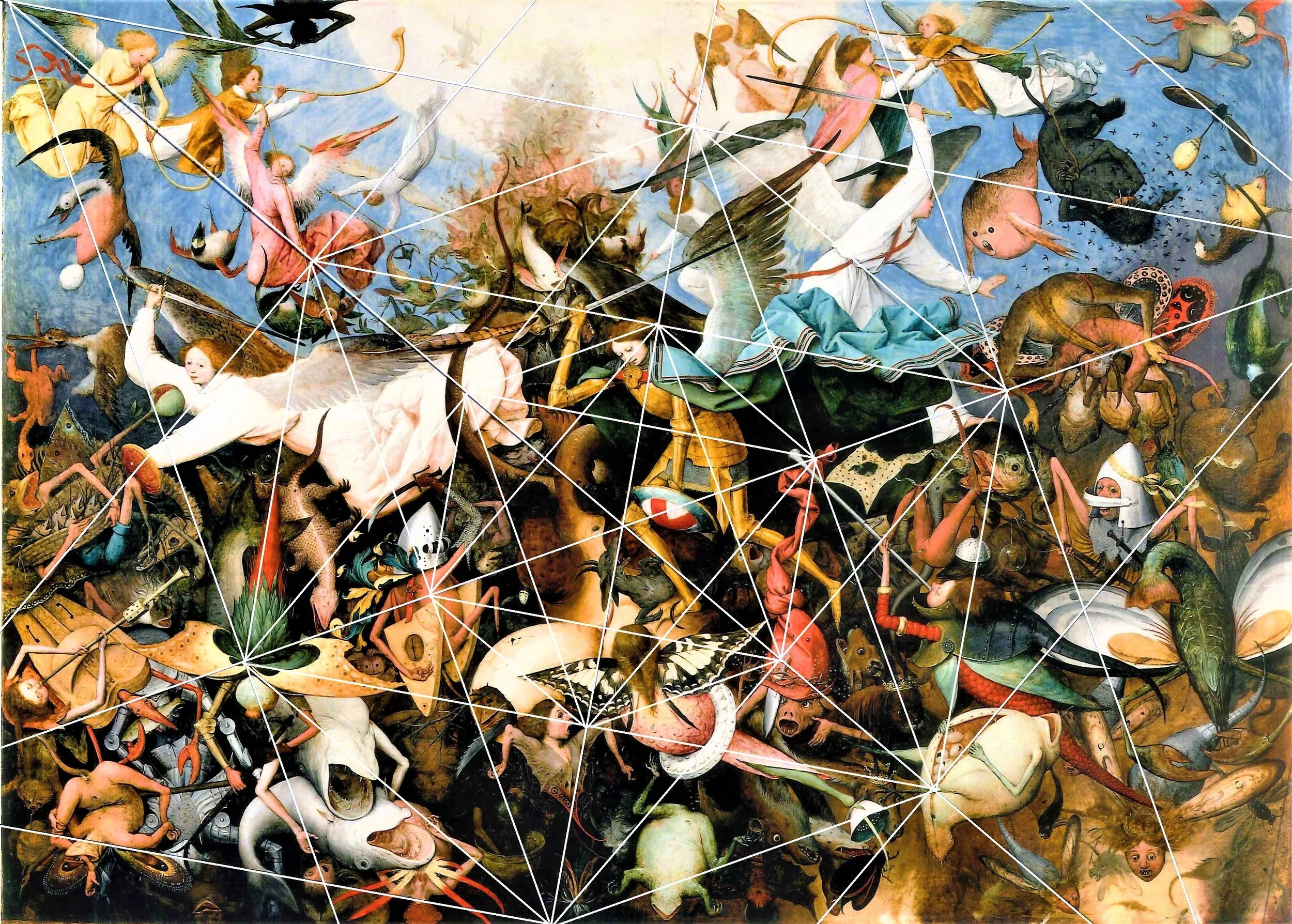
The Fall of the Rebel Angels, Pieter Bruegel the Elder, 1562
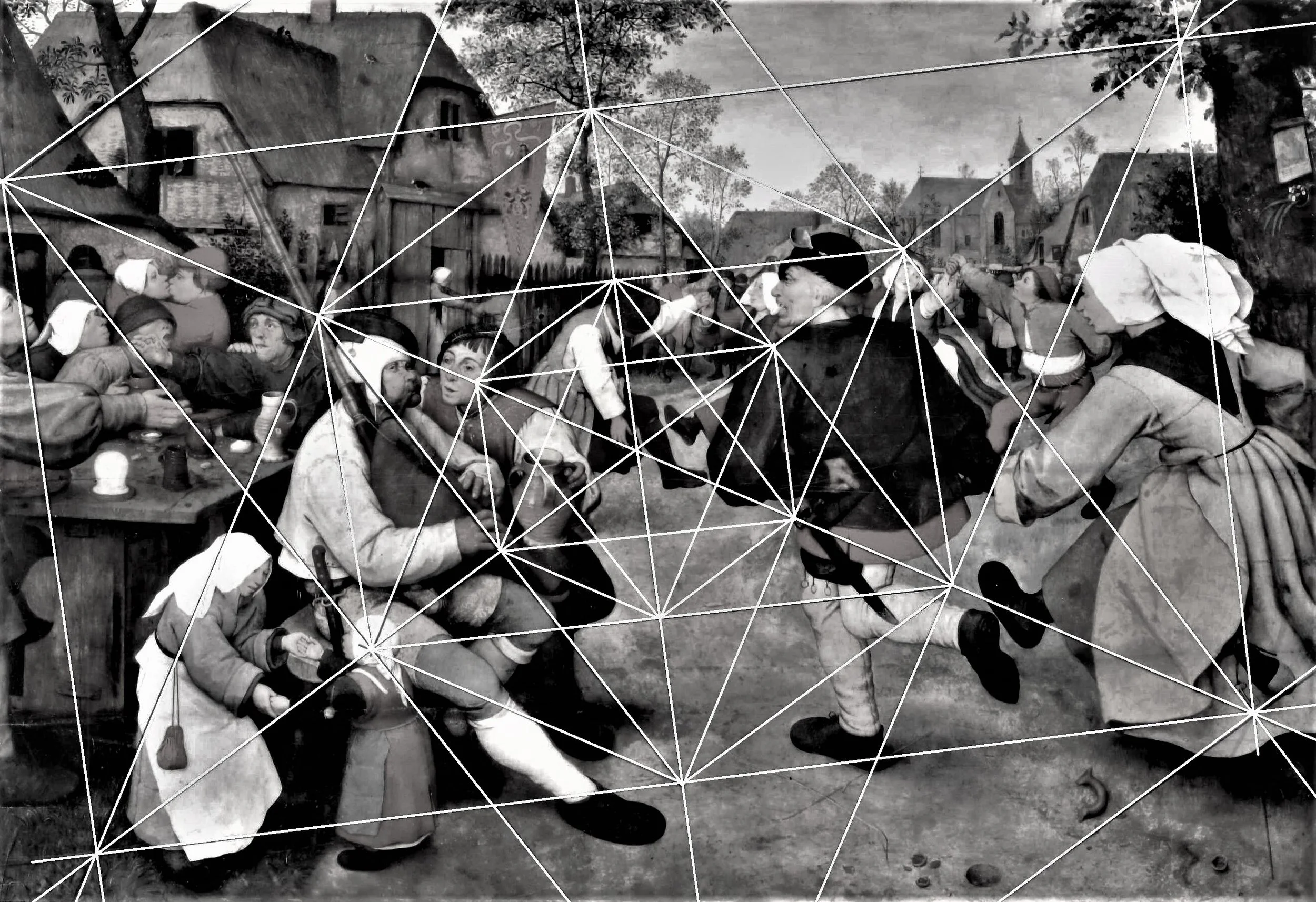
The Peasant Dance, Pieter Brueguel the Elder, 1567
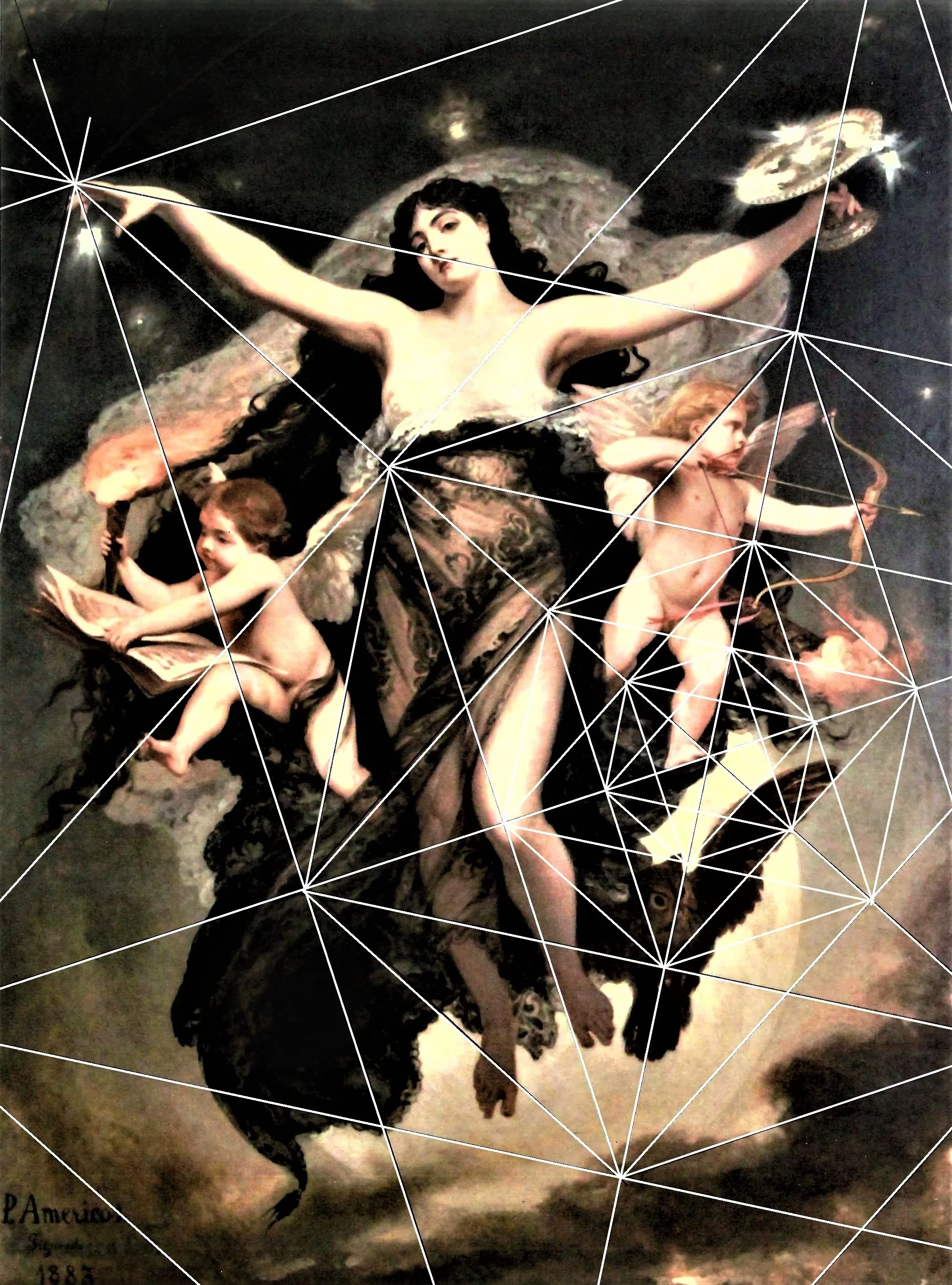
Night with the Geniuses of Love and Study, Pedro Americano, 1883
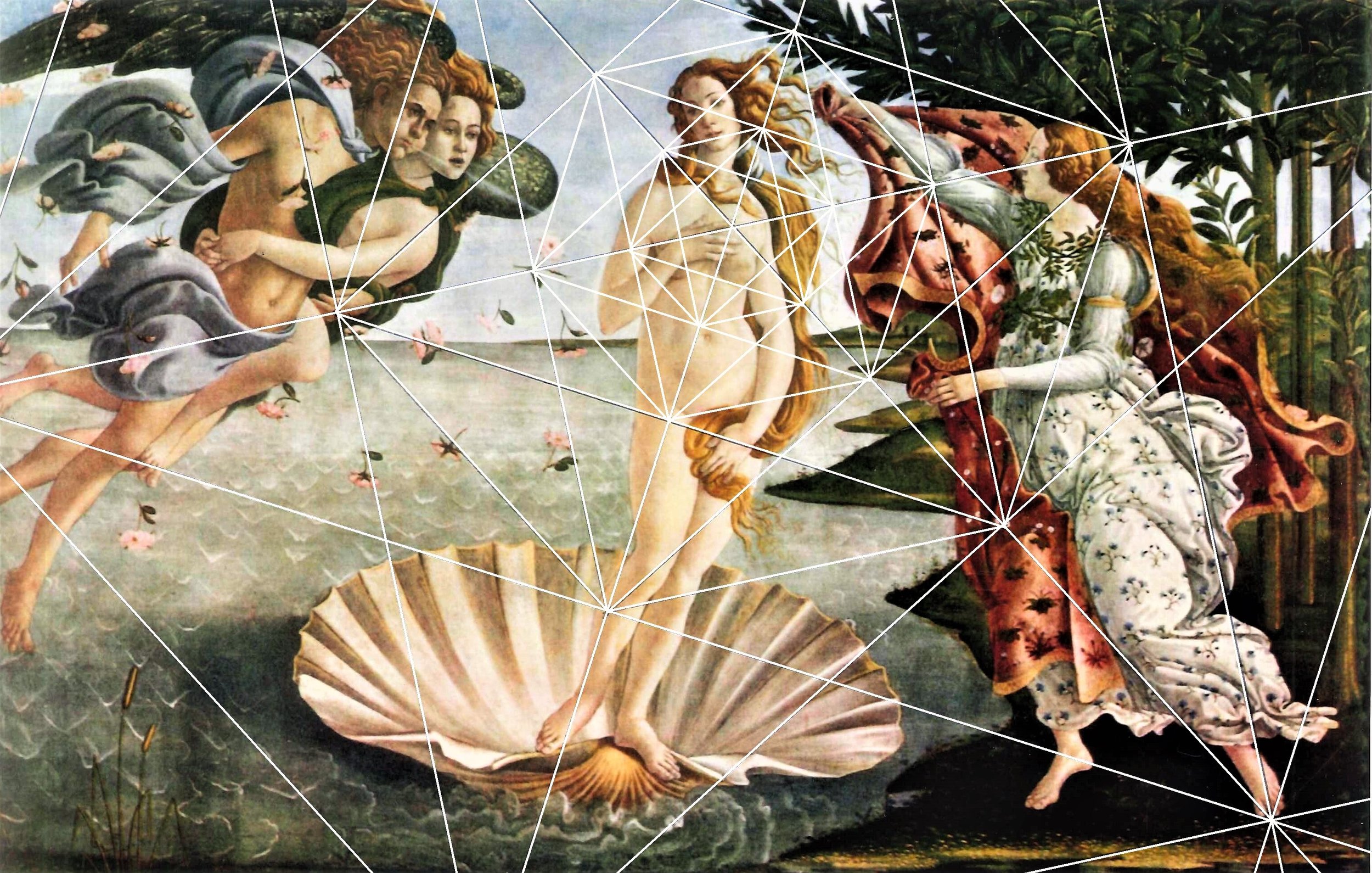
The Birth of Venus, Sandro Botticelli, 1480
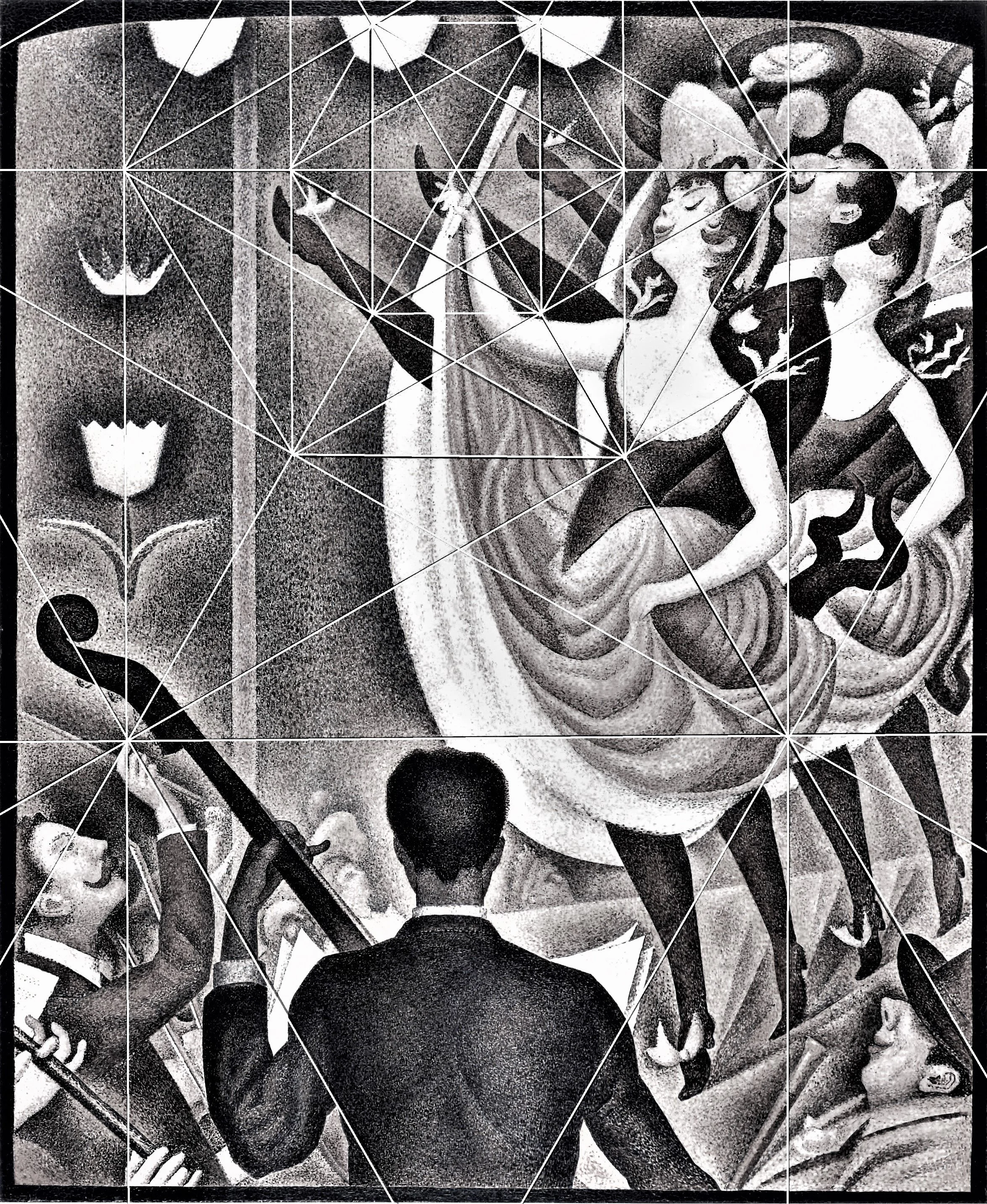
Le Chahut, Georges Seurat, 1890
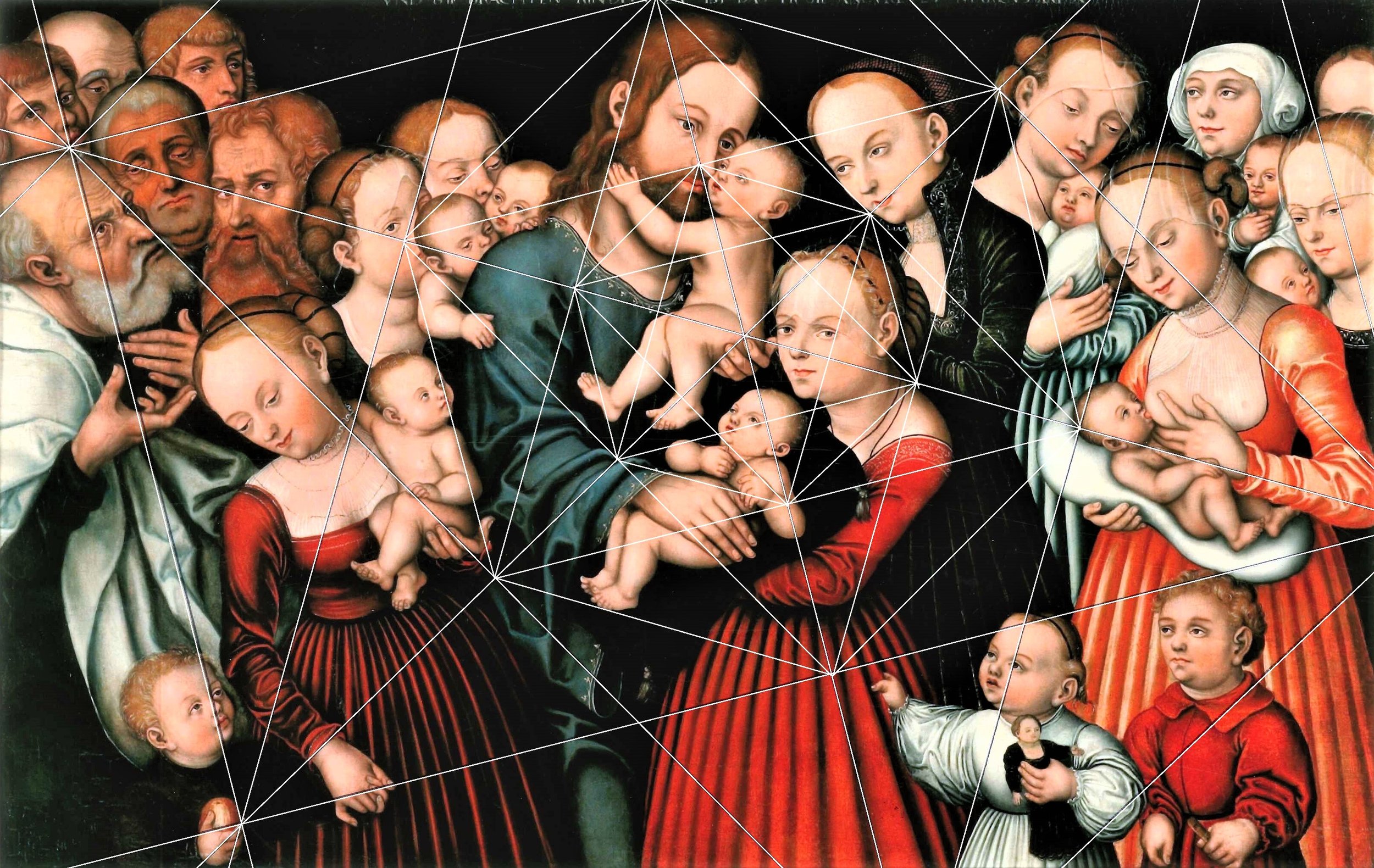
Christ Blessing the Children, Lucas Cranach the Elder, 1537
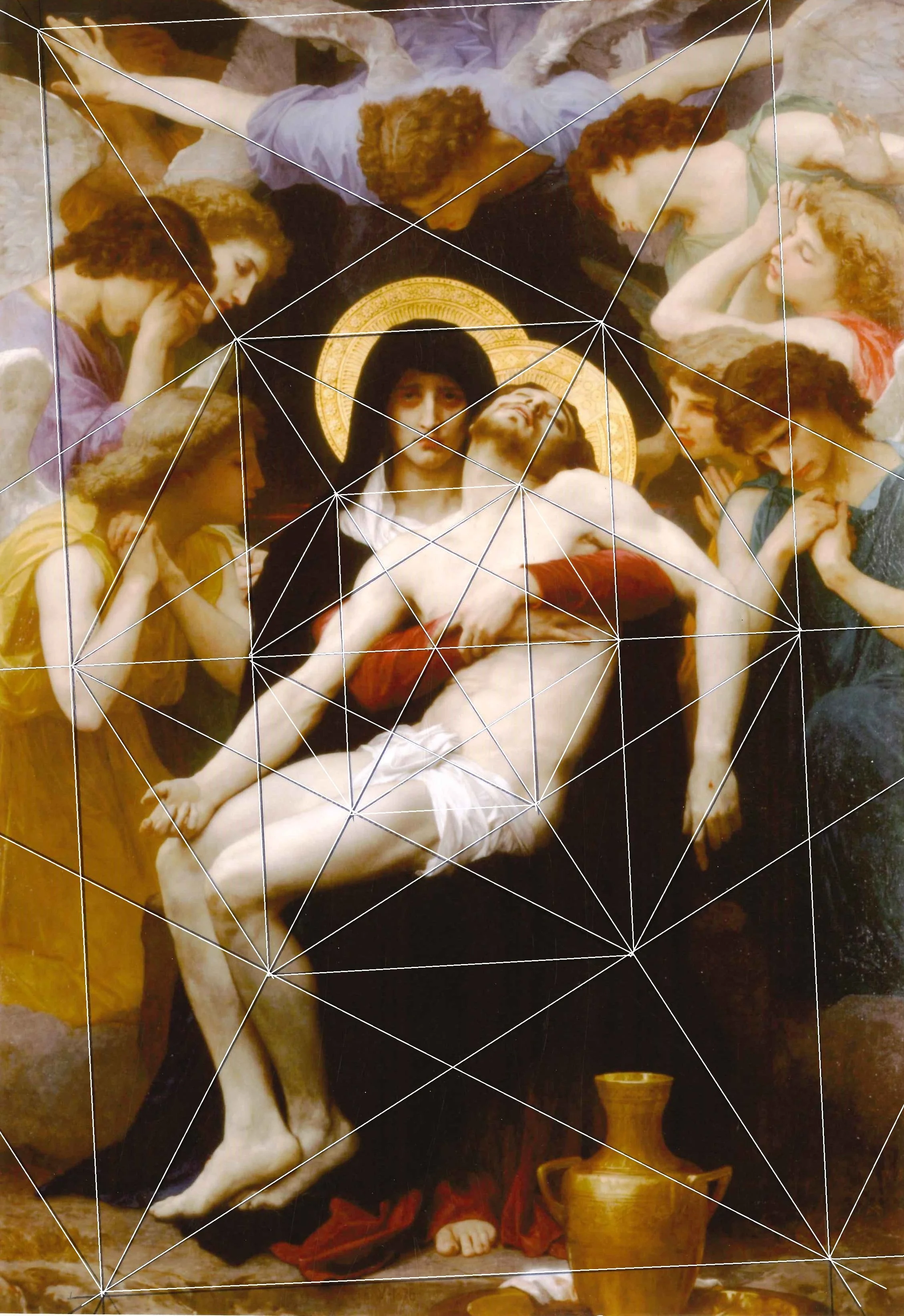
Pietà, William-Adolphe Bouguereau, 1876
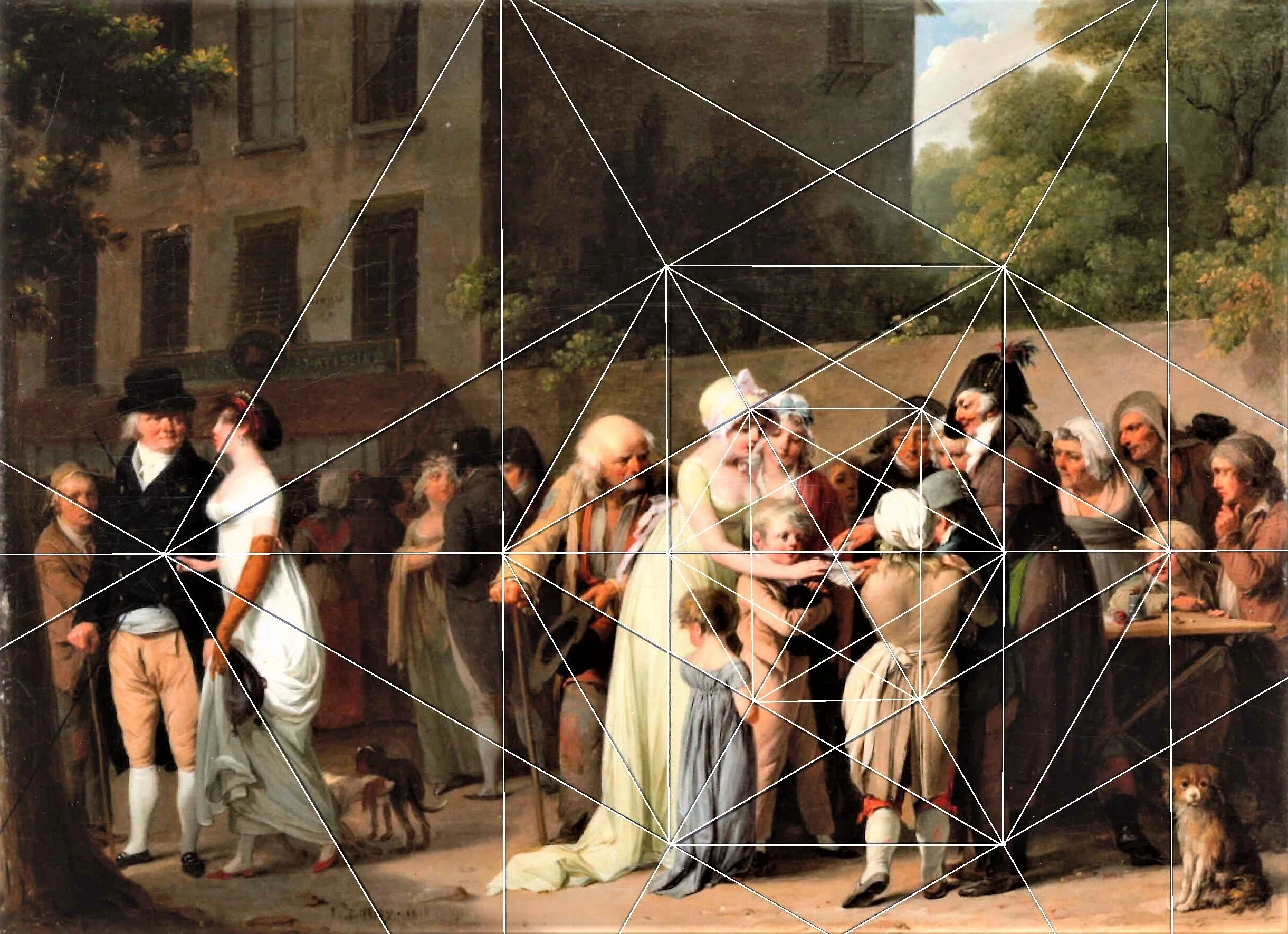
The Card Sharp on the Boulevard, Louis-Léopold Boilly, 1806
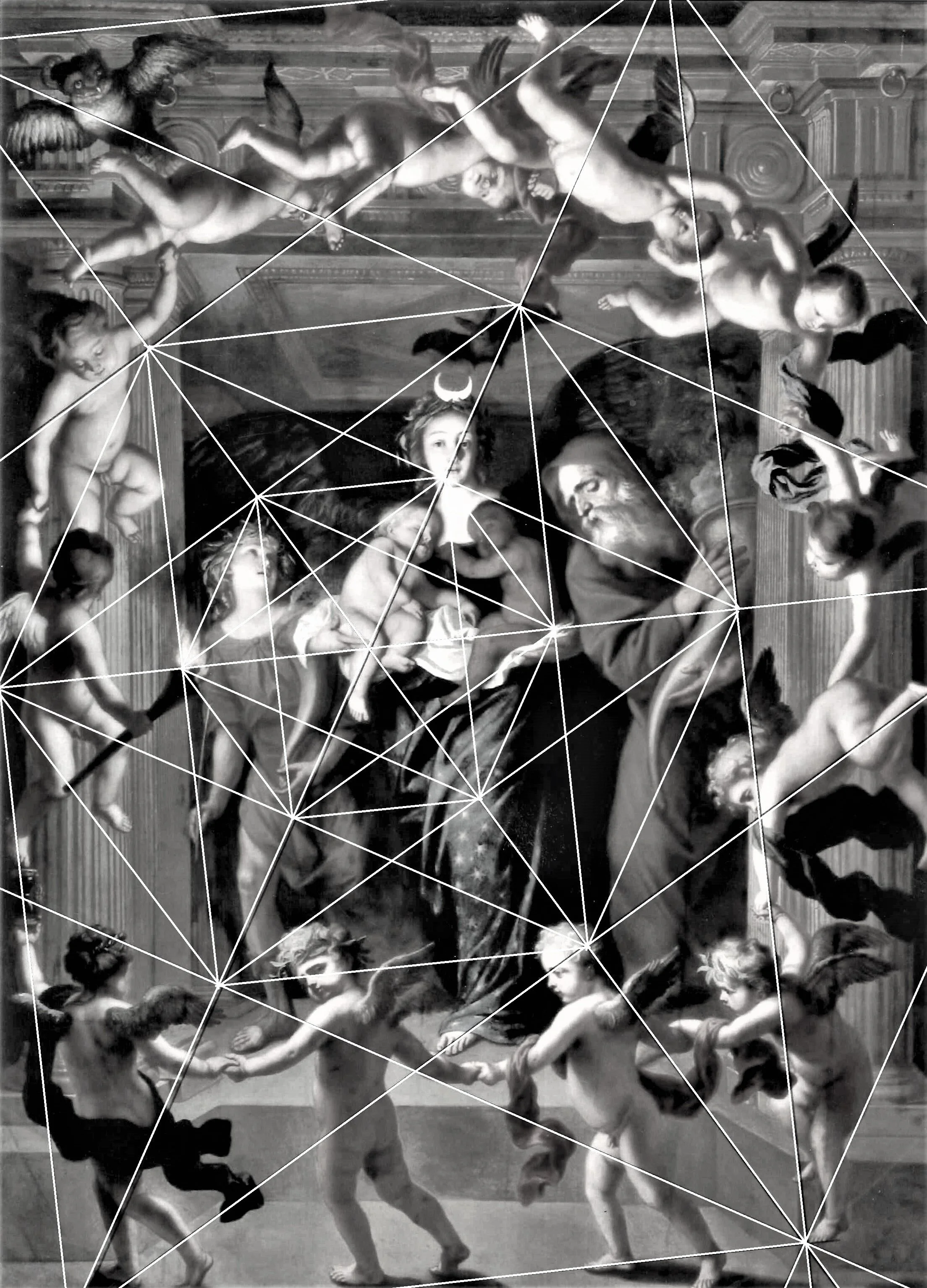
Allegory of the Night, Jan van den Hoecke, 1650
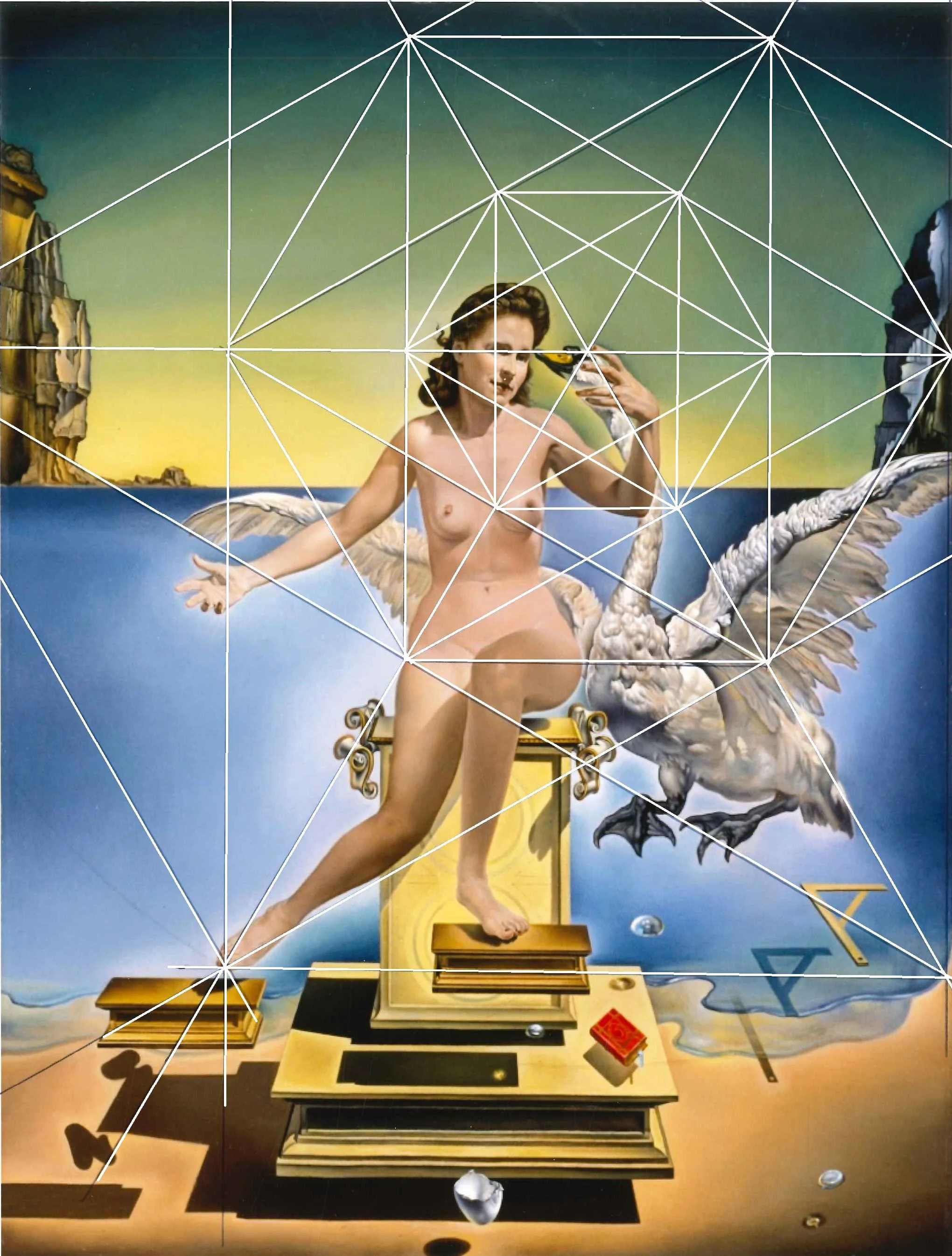
Leda Atomica, Salvador Dali, 1949
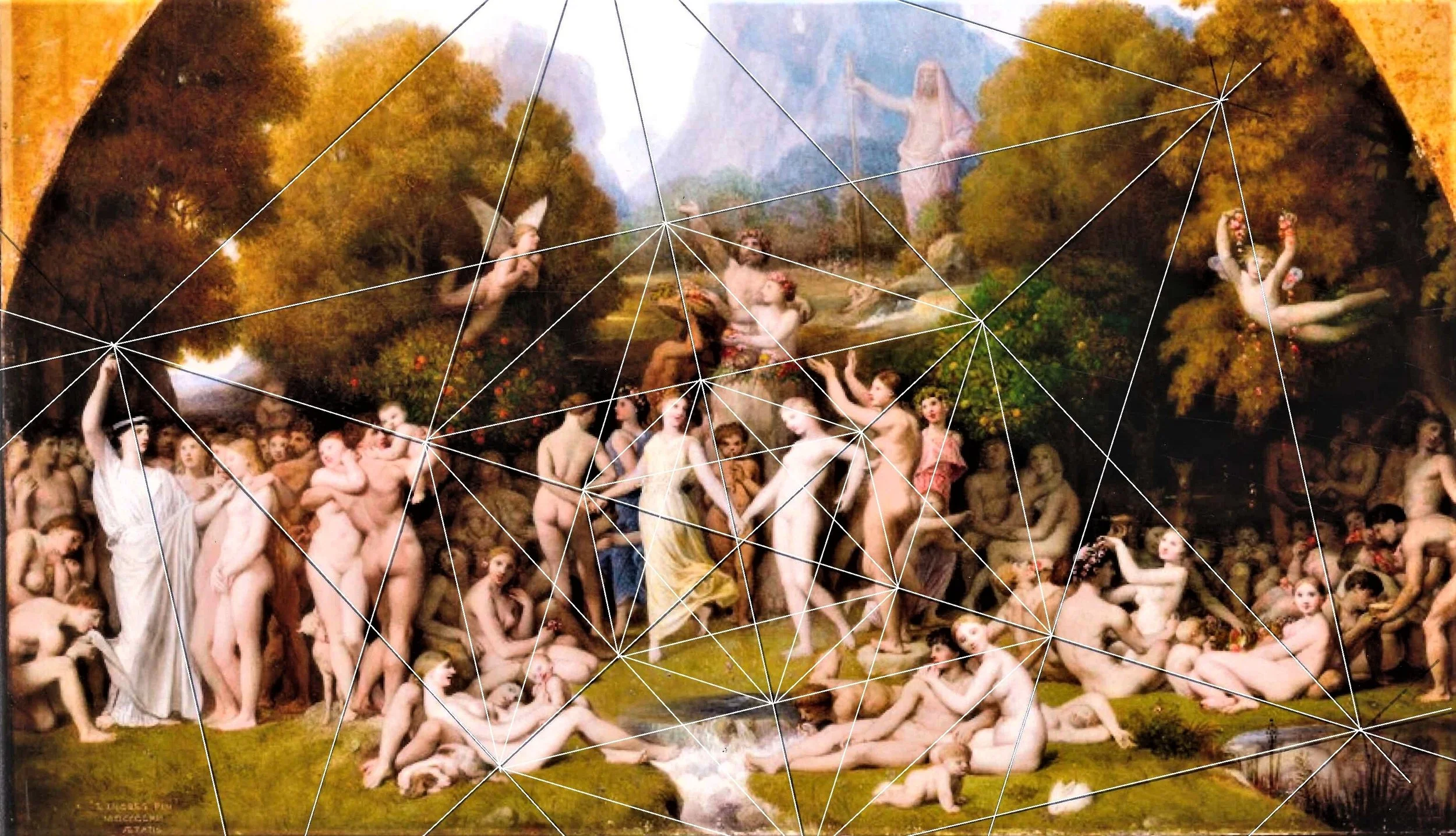
The Golden Age (detail) (1862), Ingres. “I began from the background, with the architecture. Once the lines were marked out, I called all my figures, one by one, and they came obediently to take their places in the perspective.” Charles Blanc, quoting Ingres in Ingres, sa vie et ses ouvrages, Paris 1870
Charles Bouleau, The Painter's Secret Geometry:
In the Middle Ages the 'geometry' of a work of art, whether picture, bas-relief or page of manuscript, consisted chiefly in the use of the regular polygons as an armature, as an interior framework, figures that were sometimes quite complicated, with five, six, or eight sides, not forgetting the double figures formed by the star pentagons and hexagons.
Dropbox file with examples of geometric grids used in paintings: www.dropbox.com/sh/15peqzgebsok8zy/AAAXy4W00NuipnfgD3s-q6xva?dl=0