Cain and Abel
The story of Cain and Abel has an interesting parallel with the Roman myth of Romulus and Remus. In both narratives, a fratricide, occasioned by a dispute regarding God or the gods, precedes the founding of a city. Cain works the earth and founds the first city, so he is associated with agriculture, while Abel is associated with shepherding and older nomadic life. One possible reading relates to the change in religion that occurs with the introduction of agriculture and the development of stable, large-scale civilization. Previously confined to small-scale shamanism, religion becomes the central organizing principle of society. It becomes institutionalized and ossifies, losing its direct connection to the divine, apart from revelation. This theme is present in the Mesopotamian epic of Gilgamesh, the oldest surviving written story:
Gilgamesh's quest for the plant of immortality may hide an idealized memory of, and nostalgia for, abandoned shamanic drug plants... Is the plant they seek, in reality, the drug plant with which their shamanic predecessors had 'attained immortality', that is, seen the things of heaven? Such myths seem to signal the end of the free performance of the shamanic rite, and the inculcation of a new ethic of subservience to the state... There are a number of Mesopotamian myths that show a concern about the inability of human beings to fly, alongside those that show anxiety about the inaccessibility of a plant with special powers. It might be anxiety over the loss of the shamanic performance, and the drug plant used in it, that these myths record.
Thomas McEvilley, The Shape of Ancient Thought: Comparative Studies in Greek and Indian Philosophies

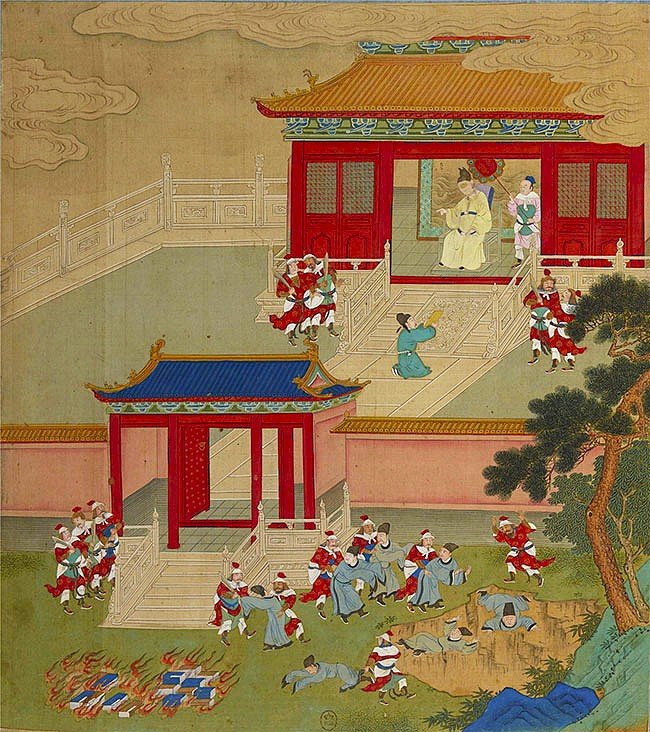
Cain and Abel can be read, then, as the state and the church. A good example is Henry VIII and the monasteries. Another example is the “burning of books and burying of scholars” that occurred in 213-212 BC, after the initial consolidation of the Chinese state. The Qin Dynasty favored the philosophy of Legalism, which stressed the absolute power of the state. Other schools, notably Taoism and Confucianism, were discouraged and persecuted.